
Porpax
Porpax
Propagation of Porpax is primarily achieved through division of mature clumps, which is best performed during the spring season when new growth emerges.
What the section contains


Porpax
When dividing, ensure each segment contains enough healthy pseudobulbs and a robust root system to sustain the plant during the re-establishment phase.
While seed propagation is biologically possible, it is reserved for laboratory environments due to the complex symbiotic requirements of orchid embryos.
After division, placing the plants in a high-humidity environment or a closed cloche will significantly increase the success rate of rooting in new media.
It is essential to use clean, sterilized cutting tools to prevent the transfer of pathogens to the vascular system of the divided plants.
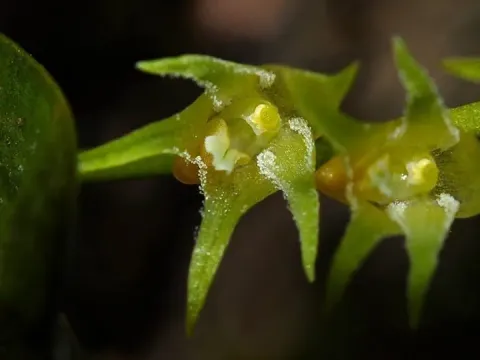
Porpax is a genus of diminutive epiphytic orchids within the Orchidaceae family, native to the tropical regions of India and Southeast Asia.
These plants are characterized by their tightly packed, flattened pseudobulbs that exhibit succulent-like properties to withstand dry periods in their natural habitats.
Successful cultivation requires bright, filtered light; direct tropical sunlight should be avoided as it can easily scorch the fleshy pseudobulbs.
An ideal substrate for Porpax must be extremely well-draining, typically consisting of fine-grade bark, charcoal, and perlite, ensuring optimal root aeration.
Maintaining high relative humidity, ideally between 60% and 80%, alongside consistent air movement, is critical for the metabolic health of these miniature plants.
Overwatering remains the most significant threat to Porpax, as stagnant water in the substrate quickly leads to the decay of roots and pseudobulbs.
Pests such as spider mites, aphids, and mealybugs can infest the plants, particularly if the humidity levels are allowed to drop too low for extended periods.
Fungal rots, often manifesting as dark, mushy patches on the pseudobulbs, are typically caused by insufficient ventilation and cold, damp environmental conditions.
Regular inspection of the plant's surface is recommended to catch infestations early, allowing for the application of appropriate biological or chemical controls.
Implementing a strict preventive fungicide schedule during periods of high humidity can help protect the plants from opportunistic infections.