
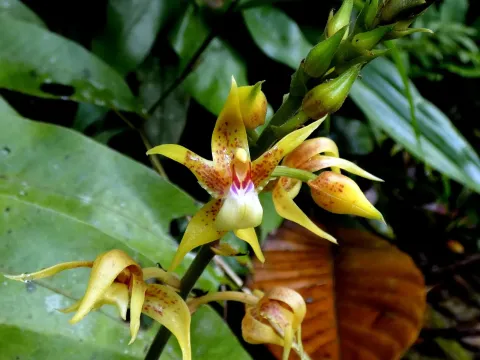
Plocoglottis
Plocoglottis
Plocoglottis is a genus of terrestrial plants belonging to the Orchidaceae family. Unlike epiphytic orchids, these species prefer to grow directly in the soil, often establishing symbiotic relationships with microorganisms within the forest floor litter.
What the section contains


Plocoglottis
The natural habitat of this genus spans the tropical regions of Southeast Asia, including Indonesia, Malaysia, and the Philippines. In the wild, they are typically found in dense, humid forests characterized by shaded areas and high atmospheric moisture levels.
These plants require a specific microclimate, with ideal temperatures ranging between 20 and 28 degrees Celsius throughout the year. Sudden temperature fluctuations and cold drafts can severely damage the root system and foliage of the orchid.
For successful cultivation, a substrate rich in organic matter is essential; it must retain moisture while providing excellent drainage. The soil should be slightly acidic and loose, ensuring that roots can breathe freely and grow without the risk of rot.
Consistent watering is necessary, avoiding the complete drying out of the root zone, as these orchids are highly sensitive to moisture deficiency. Maintaining high ambient humidity, around 70-80%, through regular misting or automated humidification systems is optimal.
Fungal infections are the primary threat to Plocoglottis, usually caused by excess moisture stagnation in the substrate or poor ventilation. Root rot can quickly destroy the entire plant if left unaddressed in a waterlogged environment.
Common pests include scale insects and mealybugs, which feed on the plant's cell sap. Regular inspection of the underside of the leaves and proactive treatment with biological agents are effective methods to prevent infestations from spreading through a collection.
Spider mites may become a problem in environments with low humidity, making it crucial to monitor hygrometric levels consistently. Damaged areas should be promptly removed, followed by the application of fungicides or insecticides to disinfect the affected plant.
Viral diseases, while less frequent, pose a significant threat as they are largely incurable. The standard control method involves isolating affected specimens and strictly adhering to sanitation protocols when handling the plants or using gardening tools.
Improper fertilization regimes can lead to salt accumulation in the substrate, resulting in chemical root burn. It is vital to use specialized orchid fertilizers at low concentrations, alternating them with thorough watering using clean, settled water.