
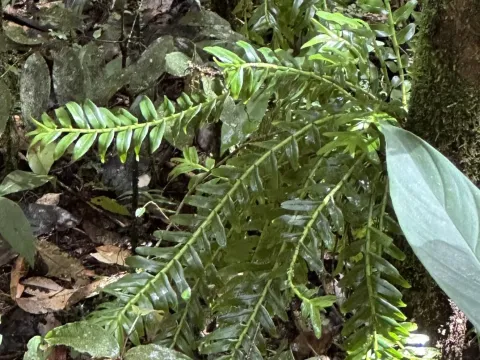
Podochilus
Podochilus
Podochilus is a diverse genus of epiphytic and lithophytic plants belonging to the Orchidaceae family. Naturally occurring in the tropical rainforests of Southeast Asia and Oceania, these orchids are prized by collectors for their unique structural form.
What the section contains


Podochilus
The plants are characterized by slender stems densely covered with small, overlapping leaves, often resembling miniature conifers or ferns. This distinct morphology makes them a unique addition to specialized greenhouse collections.
Successful cultivation requires environmental conditions that strictly replicate tropical ecosystems. High humidity, preferably between 70% and 80%, is essential for maintaining the health of the foliage and root systems.
Mounting the plants on cork bark or tree fern fiber is the standard agricultural practice, as this provides the necessary drainage and aeration. Traditional potting mixes often retain too much moisture and can lead to root suffocation.
Temperature management is crucial: the plants thrive in intermediate to warm conditions. It is important to maintain stable temperatures and ensure high-quality air circulation to prevent the development of stagnant air pockets.
The primary agricultural threat to Podochilus species is the onset of fungal rot. This usually occurs when excessive moisture is trapped between the overlapping leaves or within the root zone due to poor air circulation.
Pests such as spider mites and mealybugs are significant threats in controlled environments. They often colonize the tight spaces where leaves meet the stem, making them difficult to detect until an infestation is well-established.
Effective management includes regular biological monitoring and the use of insecticidal soaps or systemic pesticides approved for use on delicate orchid species. Preventive sanitation of the greenhouse is the most effective defense.
Viral infections may occur if infected tools are used during maintenance. Strict adherence to sterilization protocols for pruning shears and other tools is required to prevent cross-contamination.
Over-fertilization represents a major physiological stressor. Excess salts can accumulate in the substrate, damaging the sensitive root tips and leading to overall plant decline and increased susceptibility to diseases.