
Ponthieva
Ponthieva
The genus Ponthieva belongs to the Orchidaceae family. These are perennial herbaceous plants that typically lead a terrestrial lifestyle in their natural habitat, though some species may exhibit epiphytic characteristics.
What the section contains


Ponthieva
The origin of these plants is tied to the New World. Their distribution range extends from the southern United States through Central and South America, including the Caribbean islands, where they thrive in humid forest understories with moderate light.
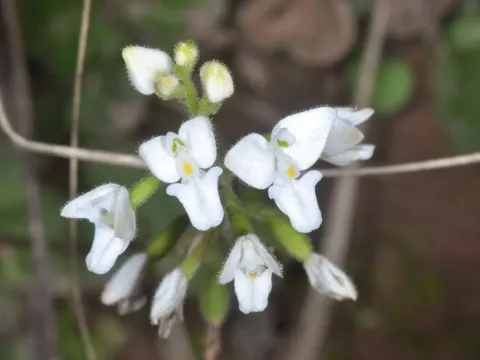
Botanically, Ponthieva species are distinguished by a basal rosette of leaves, which often feature a velvety texture or prominent venation. The inflorescences consist of racemes with small but highly intricate flowers, making them a point of interest for orchid enthusiasts.
The culture requires specific climate conditions: consistent high humidity and protection from direct sunlight. The growing medium must be loose and well-aerated, typically composed of pine bark, sphagnum moss, and perlite to prevent water stagnation.
Economic use is limited to ornamental floriculture. While not grown as a mass agricultural crop, the genus holds significant scientific value for breeding programs and the preservation of biodiversity in tropical ecosystems.
The primary threats to members of this genus include fungal diseases, which often arise due to improper watering schedules and poor ventilation in the root zone.
A common pest is the spider mite, which reproduces rapidly in the dry air of indoor environments, causing damage to the delicate foliage of the orchid.
Infestations of scale insects and mealybugs are also possible. To control pest populations, regular visual inspections and the application of biological insecticides are recommended.
Using an unsuitable substrate contributes to the development of root rots, which are notoriously difficult to treat, making sterility during repotting critical.
In their natural environment, these plants may also be susceptible to pathogens transmitted through soil nematodes, requiring careful selection of potting mix components.