
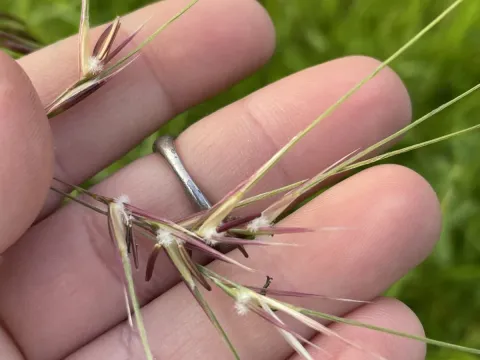
Nassella
Nassella
Sowing of Nassella seeds is primarily conducted in the spring when soil temperatures reach +10...+12°C. In regions with milder climates, late-autumn sowing is possible to allow for natural stratification.
What the section contains
 Chilean Needle Grass
Nassella neesiana
Chilean Needle Grass
Nassella neesiana
 Mexican feather grass
Nassella tenuissima
Mexican feather grass
Nassella tenuissima
 Nassella hyalina
Nassella longiglumis
Nassella longiglumis
Nassella hyalina
Nassella hyalina
Nassella longiglumis
Nassella longiglumis
 Nassella megapotamia
Nassella megapotamia
Nassella megapotamia
 Nassella mucronata
Nassella pampeana
Nassella pampeana
Nassella philippii
Nassella philippii
Nassella mucronata
Nassella mucronata
Nassella pampeana
Nassella pampeana
Nassella philippii
Nassella philippii
 Nassella poeppigiana
Nassella poeppigiana
Nassella poeppigiana
 Nassella pulchra
Nassella pulchra
Nassella pulchra
 Nassella trichotoma
Nassella trichotoma
Nassella trichotoma
Nassella
The sowing depth is 1–2 centimeters. It is crucial to ensure good seed-to-soil contact to facilitate uniform germination, as small seeds are highly sensitive to desiccation of the topsoil.
When cultivating for ornamental or forage purposes, the seeding rate varies depending on the method: row planting requires fewer seeds than broadcast sowing.
Seedlings appear within 2–3 weeks after sowing, provided the soil is kept consistently moist. Young plants grow slowly, requiring diligent weed control during the early development stages.
To speed up the biomass production process, some growers use laboratory pre-germination techniques before sowing seeds directly into the field.
Nassella belongs to the Poaceae family and is a perennial herbaceous plant. The genus includes species adapted to dry and sunny habitats.
The plant prefers well-drained, sandy or loamy soils with a neutral to slightly alkaline pH. Waterlogging is detrimental to the culture and leads to root system decay.
The genus is known for its high drought tolerance, making it suitable for regions with limited rainfall. Full sun exposure is essential for vigorous development and the formation of a robust root system.
The temperature optimum for vegetation ranges from +20°C to +25°C. Many species can withstand occasional light frosts, although prolonged periods of extreme cold may require protection.
Mineral fertilizer application should be moderate. Excess nitrogen promotes excessive vegetative growth at the expense of lodging resistance and overall plant health.
The agricultural use of Nassella is most often associated with landscaping and erosion control, although some species are explored as a source of biomass for forage in arid zones.
Yield of green biomass depends directly on stand density and the level of agronomic care provided. In favorable years, the culture shows stable growth of above-ground parts.
Productivity is limited by the plant's biological cycle: after the peak flowering phase, growth slows down, and the nutritional value of the biomass decreases.
When grown for seed, yield potential is limited by seed shattering, which requires careful monitoring of the grain ripening phase.
To maintain plantation longevity, it is recommended to rejuvenate clumps by dividing rootstocks or overseeding new plants every 5–7 years.
The main pests for Nassella are cereal flies, which damage young shoots during the initial growth phase, reducing overall stand density.
Under conditions of high humidity, plants may be affected by powdery mildew, appearing as a white coating on the leaves. This disease slows photosynthesis and weakens the grass's immunity.
Other threats include root rots caused by improper irrigation regimes and poor soil aeration. Affected specimens should be removed to prevent the spread of infection.
Insect pests such as aphids and thrips may also damage leaf blades, sucking sap and facilitating the development of secondary fungal diseases.
Control measures include crop rotation, the use of disease-free planting material, and preventive fungicide or insecticide applications at the first sign of infestation.
Seed harvesting is conducted when seeds reach full maturity, indicated by the panicles acquiring a straw-like color and seeds separating easily from the spikelets.
For seed collection, the windrowing method is often preferred to prevent losses caused by premature shattering in the field.
When using Nassella as a forage crop, mowing should take place before the heading phase to ensure maximum protein retention in plant tissues.
After mowing, the material is left in windrows to dry before being baled or shredded, depending on the intended use of the biomass.
Storing the harvest requires dry, well-ventilated conditions with air humidity no higher than 14% to prevent self-heating and mold growth.