
Mutton grass
Poa fendleriana
Description
Sowing dates
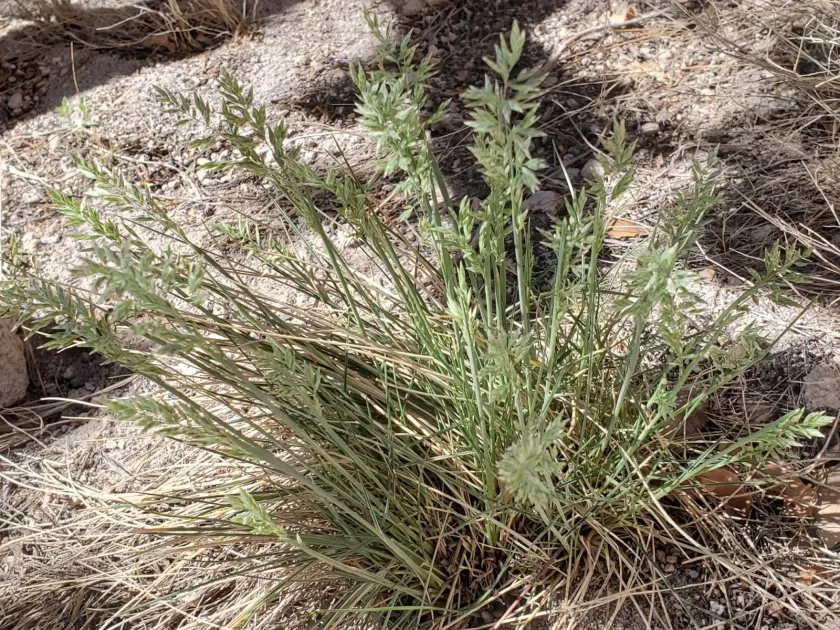
Mutton grass (Poa fendleriana) is a resilient perennial bunchgrass belonging to the Poaceae family. Known for its slow seedling establishment, it requires precise planting techniques to ensure successful germination and growth.
The optimal sowing time is early spring when soil moisture is at its peak. Fall planting is also effective in certain regions, allowing the seeds to undergo natural stratification during the winter months, which often results in better emergence.
Seeds should be planted at a shallow depth of approximately 1-1.5 centimeters. Following sowing, it is essential to firm the soil with a roller to ensure good seed-to-soil contact, which is critical for the survival of the small seedlings.
Because young plants grow slowly, it is vital to select weed-free sites for initial sowing. Competition from aggressive weeds can easily smother Mutton grass, so early weed management is highly recommended.
Providing adequate moisture during the first few weeks of the growing season is crucial until the roots reach deeper soil profiles, where the plant can then exhibit its natural drought resistance.
Growing requirements
Mutton grass is native to arid and semi-arid environments, particularly throughout the mountainous regions of North America. It is exceptionally well-adapted to harsh conditions with limited rainfall.
The plant thrives in well-drained, loamy, or rocky soils with neutral to slightly alkaline pH levels. It does not tolerate waterlogged conditions or poor drainage, which can lead to root system failure.
This species displays remarkable cold tolerance, making it suitable for regions characterized by harsh, continental climates and significant temperature fluctuations between seasons.
It has low fertility requirements, performing well even in nutrient-poor soils. This characteristic makes it an excellent candidate for reseeding degraded rangelands where high-input crops would fail.
Mutton grass is a sun-loving plant that requires full exposure to thrive. It performs poorly in shaded areas and is not recommended for understory planting or areas with dense canopy coverage.
Yield
While Mutton grass does not produce the high biomass volumes of irrigated hay crops, its value lies in its longevity and consistency as a reliable forage source in semi-arid rangelands.
It is highly palatable to both cattle and sheep throughout the growing season. A notable trait is its ability to retain nutritional value even after the plant matures and cures, serving as excellent winter forage.
Due to its bunchgrass growth habit, it is highly effective at stabilizing soil on slopes and preventing erosion, while simultaneously contributing to the overall biodiversity of the pasture.
Typical dry matter yields vary depending on climatic conditions, usually ranging from 0.5 to 1.5 tons per hectare. This is generally considered productive for low-maintenance range management.
The plant demonstrates excellent regrowth capabilities following managed grazing, allowing for sustainable long-term pasture utilization without the risk of overgrazing-induced degradation.
Main diseases and pests
Common threats to Mutton grass populations include fungal pathogens such as rust, which can proliferate during periods of high humidity and stagnant air circulation within the stand.
Root rot is a common issue if the soil remains excessively wet for long periods. Ensuring proper site selection based on drainage is the primary method of preventing this condition.
Insect pests, including various grass-feeding larvae and stem-boring flies, can cause localized damage. These threats are generally managed through integrated pest control rather than intensive chemical use.
Maintaining appropriate planting density is key to reducing disease incidence. Overcrowding encourages the buildup of pathogens, whereas proper spacing allows for better airflow and plant health.
Environmental stress, such as extreme drought over multiple seasons, can reduce vigor, but Mutton grass is evolutionarily designed to recover once favorable conditions return.