
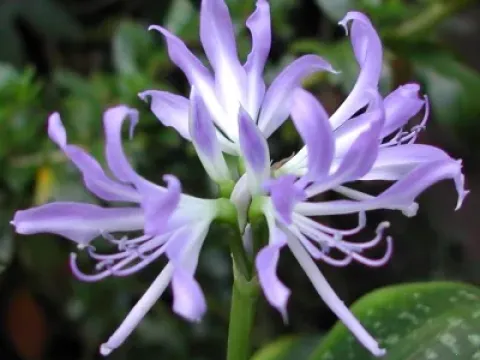
Griffinia
Griffinia
Griffinia is a genus of bulbous plants belonging to the family Amaryllidaceae, native to the tropical forests of Brazil. These plants are prized for their beautiful, bell-shaped flowers and attractive, broad foliage, making them popular in specialized ornamental horticulture.
What the section contains


Griffinia
The culture requires a stable environment with high humidity and consistent temperatures. Ideally, it thrives in environments that mimic the filtered light of the forest floor, avoiding harsh, direct sunlight that can severely scorch the plant's leaves.
Soil requirements involve a well-draining, nutrient-rich substrate. A common potting mix includes a blend of peat, perlite, and decomposed leaf mold to ensure that moisture is retained without causing the bulb to rot, which is a common problem in heavy, waterlogged soils.
Watering practices must be meticulous; during the active growing season, the plant should be kept consistently moist. However, it is essential to allow for a period of dormancy after flowering, during which watering should be significantly reduced to encourage healthy bulb development.
Temperature management is critical to the longevity of the plant. It should be kept away from cold drafts and air conditioning units, as even brief exposures to temperatures below 15°C can cause significant physiological stress and impede blooming cycles.
The primary fungal threat to Griffinia is red blotch disease (Stagonospora curtisii), which appears as reddish-purple spots on the bulbs and leaves. This disease is exacerbated by high humidity combined with poor air circulation around the crown of the plant.
Insect pests, such as aphids and spider mites, are frequent invaders. They feed on the sap of the plant, leading to distorted growth and a general decline in plant vigor. Regular inspection is recommended to detect infestations at an early stage.
Root rot, caused by overwatering, remains the most frequent cause of failure in Griffinia cultivation. Once the roots begin to decay, the entire plant loses its ability to uptake nutrients, necessitating an immediate intervention with repotting in fresh, sterile soil.
Prevention includes the use of systemic fungicides during the onset of the growing season as a precaution. Furthermore, maintaining a clean environment and removing dead or dying leaves prevents the accumulation of inoculum that can trigger outbreaks.
- Monitor leaf undersides for fine webbing.
- Ensure adequate drainage holes in containers.
- Clean leaves periodically to remove dust.
- Avoid touching the bulb surface with heavy fertilizers.
- Quarantine new plants to check for potential infestations.