
Green Narcissus
Narcissus viridiflorus
Description
Growing requirements
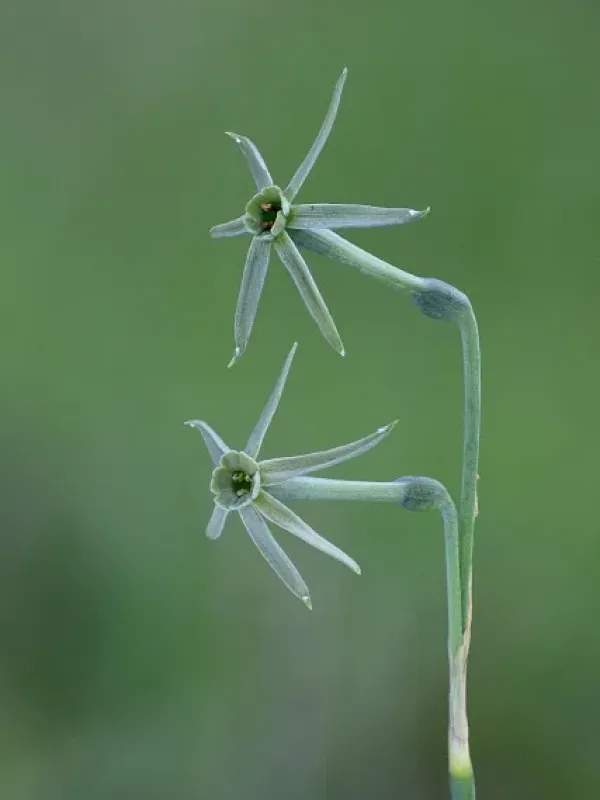
The Green Narcissus (Narcissus viridiflorus) is a unique bulbous species belonging to the Amaryllidaceae family. It is distinct from common garden narcissi, primarily recognized for its greenish, star-shaped flowers and its unusual flowering time.
Native to the Mediterranean region, specifically southern Spain and Morocco, it thrives in limestone-rich soils and rocky habitats. This species has evolved to withstand the dry Mediterranean summer, entering dormancy while waiting for the first autumn rains.
The culture requires excellent soil drainage to survive. When grown in artificial environments, it is essential to use a gritty, well-aerated substrate that mimics its natural stony habitat to prevent the bulbs from rotting.
Unlike spring-blooming varieties, this plant is an autumn bloomer. It begins its vegetative cycle in late summer or early autumn, producing slender foliage followed by narrow, fragrant green flowers that emerge from the bare soil.
Climatic requirements are specific: the plant demands high light intensity and a temperate environment. In colder climates, it must be protected from freezing temperatures, making it a perfect candidate for conservatory or alpine house cultivation.
Main diseases and pests
The primary threats to this species are fungal pathogens, specifically basal rot triggered by excessive moisture during dormancy. Maintaining a strict dry period during the summer is critical to ensure the health of the bulbs.
Pests such as the narcissus fly and root-knot nematodes are significant threats. These organisms can penetrate the bulb, causing structural damage that inhibits the plant's ability to produce healthy leaves and flowers in subsequent seasons.
Integrated pest management includes the selection of healthy bulbs and the strategic use of appropriate pesticides if infestations occur. Sanitation practices are paramount, including the removal of infected bulbs and surrounding soil.
Environmental stress, such as poor ventilation, contributes to the development of mold and mildews. Ensuring proper air circulation around the plants, especially during the active growing season, helps maintain a healthy microclimate.
Routine inspection of the bulb's surface for any signs of decay or softness is recommended. Quick action at the first sign of distress can often save the plant, provided the growing conditions are immediately corrected.