
Gaditanus narcissus
Narcissus gaditanus
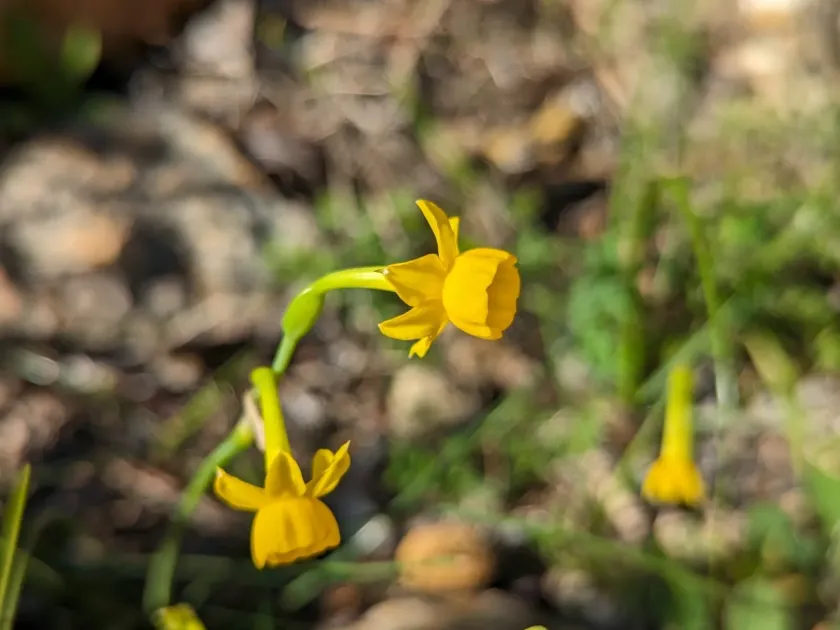
Description
Growing requirements
Narcissus gaditanus is a perennial bulbous plant belonging to the Amaryllidaceae family. It is native to the southern Iberian Peninsula, specifically regions within Spain and Portugal, where it thrives in rocky and arid landscapes.
This species is well-adapted to Mediterranean climates characterized by mild, wet winters and long, dry, hot summers. Its growth cycle is strictly tied to these seasons, beginning in early spring and entering dormancy as temperatures rise.
The plant requires extremely well-draining soil to prevent bulb rot. In a cultivation setting, it is best placed in sandy or gritty substrates that mimic the natural rocky conditions of its native habitat.
Full sun exposure is a fundamental requirement for the healthy development of Narcissus gaditanus. Sufficient solar radiation ensures the proper accumulation of nutrients in the bulb, which is necessary for the following year's flowering cycle.
During the dormant summer period, the bulbs must be kept relatively dry. Excessive moisture during this time is the most common cause of failure in growing this species, as it disturbs the plant's natural metabolic rhythm.
Main diseases and pests
The primary threats to the health of Narcissus gaditanus are soil-borne fungal pathogens such as Fusarium oxysporum. These fungi infect the bulb and root system, especially when moisture levels in the soil are consistently high.
Bulb flies, such as the Narcissus fly (Merodon equestris), pose a significant danger. The larvae feed on the interior of the bulb, causing structural damage that leads to total collapse of the plant.
Nematodes are another serious threat, causing distortion of the foliage and eventual death of the bulb. Once an infestation is confirmed, it is usually impossible to treat, necessitating the removal of the affected area.
Improper storage of harvested bulbs can also lead to issues like soft rot. To mitigate this risk, bulbs must be cleaned, dried, and stored in a well-ventilated area with low humidity.
Preventive measures include careful inspection of any imported or new bulb stock. Ensuring that no mechanical damage occurs during planting is also essential to maintain the integrity of the protective outer scales.