
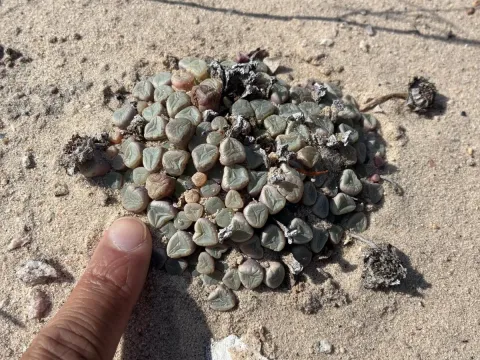
Fenestraria
Fenestraria
Sowing Fenestraria seeds should be performed during the spring months, from March to May, ensuring the plant receives adequate daylight for optimal seedling development.
What the section contains

Fenestraria
To ensure high germination rates, maintain a stable temperature between 20 and 25 degrees Celsius, as this species is highly sensitive to cold and fluctuating conditions.
Use a well-draining, mineral-based substrate, such as a mix of coarse sand, perlite, and a small amount of fine peat, which mimics the natural sandy habitat of the plant.
Seeds must be sown on the surface and should not be buried, as light is essential for their germination process; covering the container with glass or plastic helps keep humidity constant.
Once seedlings appear, gradually reduce humidity and increase airflow to harden the young plants, preventing damping-off disease which is common in succulent propagation.
Fenestraria, a member of the Aizoaceae family, is a dwarf succulent native to the arid regions of Namibia and South Africa, famous for its finger-like, translucent-tipped leaves.
The plant requires bright, indirect sunlight to thrive; the translucent windows on the leaf tips allow light to penetrate into the plant's photosynthetic tissue while buried in sand.
Watering must be extremely cautious, following the soak-and-dry method, ensuring the soil is completely dry before adding any moisture to avoid root rot.
The potting medium must be highly porous and inorganic, featuring plenty of grit or pumice to facilitate rapid drainage and prevent water accumulation around the roots.
During the dormant winter phase, Fenestraria needs cool, dry conditions with temperatures around 10–12 degrees Celsius to maintain its natural growth cycle and health.
The primary threat to Fenestraria is overwatering, which quickly leads to fungal infections and soft rot, causing the plant to collapse and decay from the root upwards.
Mealybugs are the most persistent pests for this succulent, hiding in the crevices between the leaves and sapping the plant's energy, which can lead to stunted growth.
Spider mites may also infest the plant during the dry season, particularly if humidity levels are too low, causing yellowing and scarring on the leaf surfaces.
Control strategies should focus on prevention, including keeping the environment clean and using systemic insecticides when necessary to eliminate pest colonies.
If rot is detected, immediate action is required: remove the affected plant from the pot, trim the decayed roots, and allow the remaining tissue to callous before replanting.