
Fenestraria rhopalophylla
Fenestraria rhopalophylla
Description
Sowing dates
Sowing Fenestraria rhopalophylla seeds should ideally occur in early spring, as this provides the optimal light duration for seedling development.
The seeds require a warm environment, ideally between 20°C and 25°C, to ensure high germination rates and uniform growth across the tray.
Surface sowing is essential; press the seeds lightly into a fine, well-draining sandy substrate rather than burying them deep within the soil.
Maintain consistent humidity by covering the container with a plastic lid or glass sheet until the first true leaves begin to emerge.
Once germinated, gradually introduce fresh air to the seedlings to strengthen them before eventually removing the cover entirely.
Growing requirements
Fenestraria rhopalophylla belongs to the Aizoaceae family and is native to the arid desert regions of Namibia and South Africa, known for its extreme resilience.
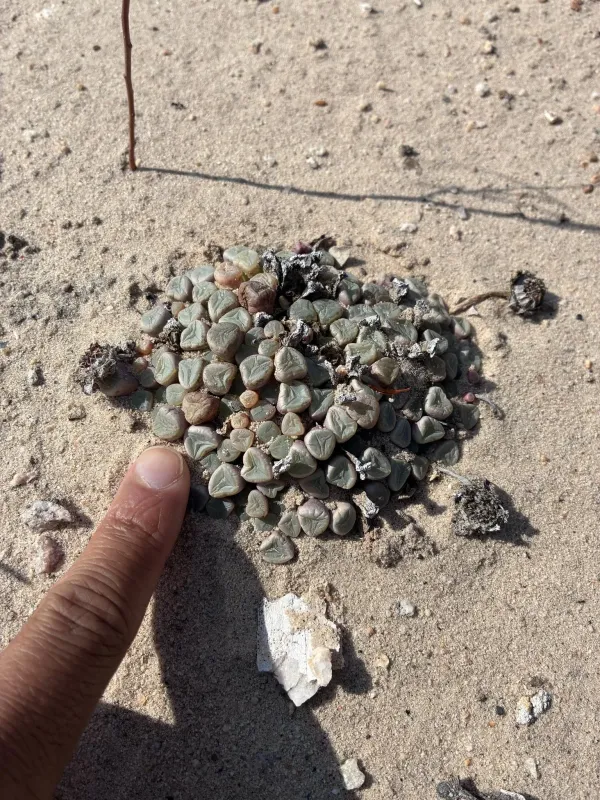
The plant is famous for its window-like structures on the tips of its cylindrical leaves, which act as natural light filters to allow photosynthesis.
Cultivation requires a highly porous, mineral-based soil mixture that drains instantly to protect the roots from any moisture stagnation.
Bright, filtered sunlight is mandatory for maintaining the compact growth habit; intense direct midday sun should be avoided in very hot climates.
Strictly limit watering during the plant's winter dormancy phase, ensuring the substrate remains almost entirely dry to prevent physiological stress.
Main diseases and pests
Excessive moisture is the primary threat to Fenestraria rhopalophylla, causing the succulent tissues to rot rapidly if drainage is insufficient.
Root rot is a critical risk factor, often caused by poorly aerated soil or over-frequent watering cycles, leading to sudden plant collapse.
Mealybugs are the most common pests, frequently hiding between the clustered leaves and weakening the plant by feeding on its internal fluids.
Poor ventilation can invite fungal infections and mold growth, which are difficult to eradicate once they take hold on the succulent surfaces.
Routine inspection of the leaf bases and the use of specialized systemic insecticides are recommended to keep the collection healthy and pest-free.