
Cyrtosia
Cyrtosia
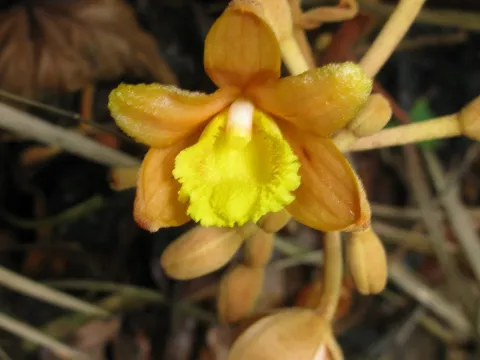
Cyrtosia is a genus of leafless, mycoheterotrophic plants belonging to the Orchidaceae family. These plants lack chlorophyll and cannot perform photosynthesis, relying entirely on a symbiotic relationship with fungi for their nutrient intake throughout their life cycle.
What the section contains


Cyrtosia
The distribution of the genus includes forest regions in Asia, spanning from Japan to India and parts of Southeast Asia. They are typically found in moist, deep forest habitats where a thick layer of organic litter supports the fungal networks necessary for their growth.
Botanically, Cyrtosia species are characterized by fleshy, scale-covered stems that often appear yellowish, orange, or brown. Unlike typical flora, they do not produce leaves, and their energy is derived from the mycelium of forest fungi located in the soil.
The requirements for survival are highly specialized. They demand a stable, shaded environment with specific soil fungi present, as the plant cannot survive if the host fungal network is disrupted by environmental changes or deforestation.
From an agricultural standpoint, Cyrtosia is not a cultivated crop. Its role is strictly ecological, contributing to the biodiversity of ancient forest ecosystems. Research into this genus provides valuable insights into plant-fungal evolution and soil microbiology.