
Cyrtosia septentrionalis
Cyrtosia septentrionalis
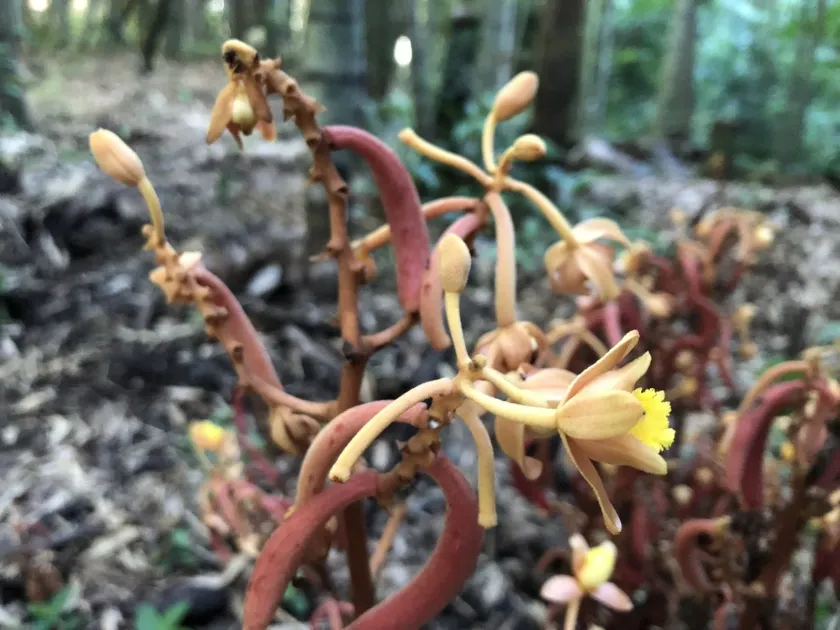
Description
Growing requirements
Cyrtosia septentrionalis is a rare and fascinating member of the Orchidaceae family. Unlike conventional crops, this plant is a mycoheterotroph, meaning it lacks chlorophyll and cannot perform photosynthesis, relying instead on a subterranean symbiotic relationship with specific fungi to survive.
The plant is native to the temperate forests of East Asia, including Japan, Korea, and China. Its natural habitat consists of shaded woodland floors where the soil is rich in organic matter and maintains a high level of humidity throughout the growing season.
Environmental conditions for this species are extremely specific. It requires a stable microclimate characterized by deep shade and a thick layer of leaf litter, which is essential for the survival of the mycorrhizal fungi that Cyrtosia septentrionalis parasitizes to obtain its nutrients.
There is no standard agricultural practice for this plant, as it cannot be farmed using traditional methods. The complex biological dependency on its fungal host makes large-scale cultivation impossible, and the species is generally considered a subject for conservation rather than commercial agriculture.
The host trees associated with these fungi are usually specific woody plants found in mature, undisturbed forests. Consequently, the presence of Cyrtosia septentrionalis is often used as a biological indicator of ecological health in ancient forest ecosystems that require protection.