
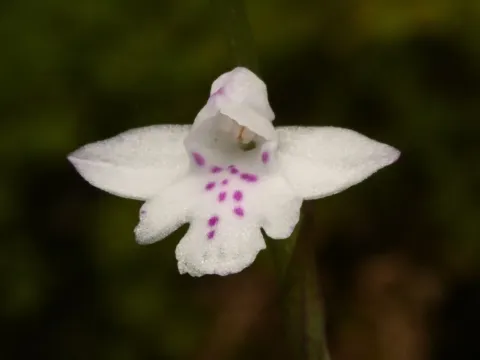
Cynorkis
Cynorkis
Cynorkis is a diverse genus of plants belonging to the Orchidaceae family, native to tropical Africa and Madagascar. These plants are typically found in moist environments, ranging from dense tropical forests to the banks of seasonal water bodies, where they rely on high humidity.
What the section contains

Cynorkis
To successfully cultivate Cynorkis, one must mimic their native habitat by maintaining high ambient humidity and moderate temperatures. Proper air circulation is essential, as the lack of it often leads to the development of fungal pathogens and rapid tissue decay in these delicate orchids.
The substrate requirement for this genus is strict: it must be highly porous to ensure that roots can breathe while maintaining a consistent moisture level. A mix of fine bark, perlite, and sphagnum moss is often recommended by botanical experts to provide the best structural support.
Light requirements are focused on bright, indirect illumination, as direct exposure to harsh midday sun can easily bleach the leaves and damage the plant's photosynthetic capabilities. In agricultural settings, shade cloths are typically used to maintain the correct light intensity.
From a horticultural standpoint, Cynorkis remains a niche group primarily intended for private collectors and botanical institutions. They are not considered a standard field crop, as their propagation and maintenance require specialized knowledge and controlled greenhouse environments.
The most significant threats to the health of Cynorkis are fungal infections, particularly root rot, which typically occurs when the growing medium remains waterlogged for extended periods. Prompt removal of decayed parts and repotting in fresh substrate is usually necessary for recovery.
Pests that commonly impact this genus include mealybugs and aphids, which tend to congregate in the leaf axils or on the undersides of leaves. Integrated pest management, involving regular inspection and the application of horticultural soaps or specific miticides, is the standard practice.