
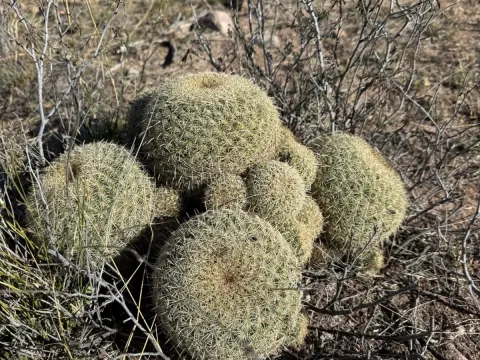
Coryphantha
Coryphantha
Coryphantha belongs to the Cactaceae family and is native to the arid regions of North America, spanning from the United States to Mexico. These plants are true xerophytes, evolutionarily adapted to survive in extreme desert environments characterized by low precipitation and high solar radiation.
What the section contains
 Coryphantha compacta
Coryphantha compacta
Coryphantha compacta
 Coryphantha cornifera
Coryphantha cornifera
Coryphantha cornifera
 Coryphantha delaetiana
Coryphantha delaetiana
Coryphantha delaetiana
 Coryphantha delicata
Coryphantha delicata
Coryphantha delicata
 Coryphantha echinus
Coryphantha echinus
Coryphantha echinus
 Coryphantha elephantidens
Coryphantha glanduligera
Coryphantha glanduligera
Coryphantha elephantidens
Coryphantha elephantidens
Coryphantha glanduligera
Coryphantha glanduligera
 Coryphantha jalpanensis
Coryphantha jalpanensis
Coryphantha jalpanensis
 Coryphantha kracikii
Coryphantha kracikii
Coryphantha kracikii
 Coryphantha longicornis
Coryphantha longicornis
Coryphantha longicornis
 Coryphantha macromeris
Coryphantha macromeris
Coryphantha macromeris
 Coryphantha maiz-tablasensis
Coryphantha maiz-tablasensis
Coryphantha maiz-tablasensis
 Coryphantha nickelsiae
Coryphantha nickelsiae
Coryphantha nickelsiae
 Coryphantha pallida
Coryphantha pallida
Coryphantha pallida
 Coryphantha pycnacantha
Coryphantha pycnacantha
Coryphantha pycnacantha
 Coryphantha retusa
Coryphantha retusa
Coryphantha retusa
 Coryphantha robustispina
Coryphantha robustispina
Coryphantha robustispina
 Coryphantha tripugionacantha
Coryphantha tripugionacantha
Coryphantha tripugionacantha
 Coryphantha werdermannii
Coryphantha werdermannii
Coryphantha werdermannii
 Missouri foxtail cactus
Coryphantha missouriensis
Missouri foxtail cactus
Coryphantha missouriensis
Coryphantha
The botanical identity of the genus is defined by the presence of prominent tubercles (mammae) featuring a distinct groove that runs from the base of the spine-bearing areole towards the axil of the tubercle. The plant body is typically globose or cylindrical and is often covered with dense, intricate spines that protect the plant from harsh sun.
To ensure healthy growth, Coryphantha requires a highly porous, gritty substrate that facilitates rapid drainage. A standard potting mix for this culture usually involves a combination of coarse sand, perlite, and small amounts of organic loam. It is essential to maintain a pH level close to neutral to allow optimal nutrient uptake.
Environmental requirements include maximum exposure to direct sunlight throughout the growing season. Proper management of the dormancy period is crucial: temperatures should be kept cool (around 10°C) with absolutely no watering during the winter months, which triggers the development of flower buds for the coming spring.
The primary utility of the genus is decorative. Because of their unique architectural structure and vibrant floral display, Coryphantha species are highly valued in the nursery industry and among botanical hobbyists. They serve as excellent specimens for rock gardens in arid climates or as prized subjects in greenhouse collections.
Common pests include spider mites and mealybugs, which can cause significant damage to the succulent tissue if left untreated. Root rot and fungal infections are typical physiological threats caused by overwatering or inadequate soil aeration in humid environments.