
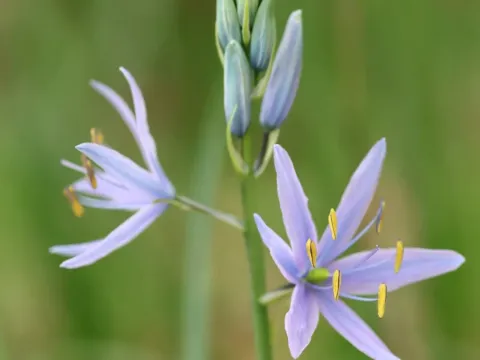
Camassia
Camassia Lindl.
Camassia bulbs should be planted in the autumn, typically from September to October, allowing the roots to establish before the ground freezes. Timing is crucial for successful spring blooms, as the bulbs require a cooling period over winter.
What the section contains


Camassia
Planting depth should be approximately 10 to 15 centimeters. Ensure the bulbs are placed with the pointed end facing upwards to support the natural growth trajectory of the shoots.
Maintain a spacing of about 15–20 centimeters between individual bulbs. This density prevents overcrowding and ensures each plant receives adequate nutrients and water as it matures.
Prepare the planting area by working organic matter, such as well-rotted compost, into the topsoil. Good drainage is essential, so if your soil is heavy clay, incorporate sand or grit to prevent rot.
After planting, water the area lightly to settle the soil. Avoid excessive watering immediately after planting to prevent the bulbs from decaying before the growth cycle begins.
Camassia is a genus of perennial plants in the Asparagaceae family, native to North America. These plants are known for their striking star-shaped flowers and thrive in moist, meadow-like environments.
The plant prefers rich, fertile soils that retain moisture during the spring but drain well throughout the rest of the year. Avoid planting in waterlogged areas where drainage is poor, as this often leads to bulb death.
Full sun to partial shade is the ideal location for Camassia. While they are adaptable, they perform best in spots where they receive morning sun but are protected from the intense heat of the afternoon.
Camassia is highly cold-hardy, making it suitable for a wide range of climates. In extremely cold regions, a light mulch layer can provide extra protection during the harshest winter months.
Regarding soil pH, Camassia prefers neutral to slightly acidic conditions. Testing your soil before planting can help you determine if amendments are needed for optimal growth and flowering.
Rodents such as mice and voles are the primary threat to Camassia bulbs, often feeding on them during the winter. Using wire cages or underground barriers during planting can protect your investment.
Fungal diseases, including Fusarium wilt and gray mold, are significant risks in poorly drained soils. These pathogens cause the base of the bulb to soften and eventually rot away.
Slugs and snails can cause noticeable damage to the foliage, especially in moist and temperate weather. Keeping the surrounding area clean and free of excessive debris can help reduce these populations.
Viral infections can lead to stunted growth and mottled leaves. Since these diseases are incurable, it is critical to remove and dispose of infected plants immediately to prevent the spread to healthy stock.
Regular monitoring of the garden is essential for early detection. Maintaining proper soil health and adequate spacing are the most effective preventative measures against both pests and diseases.