
Brodiaea terrestris
Brodiaea terrestris
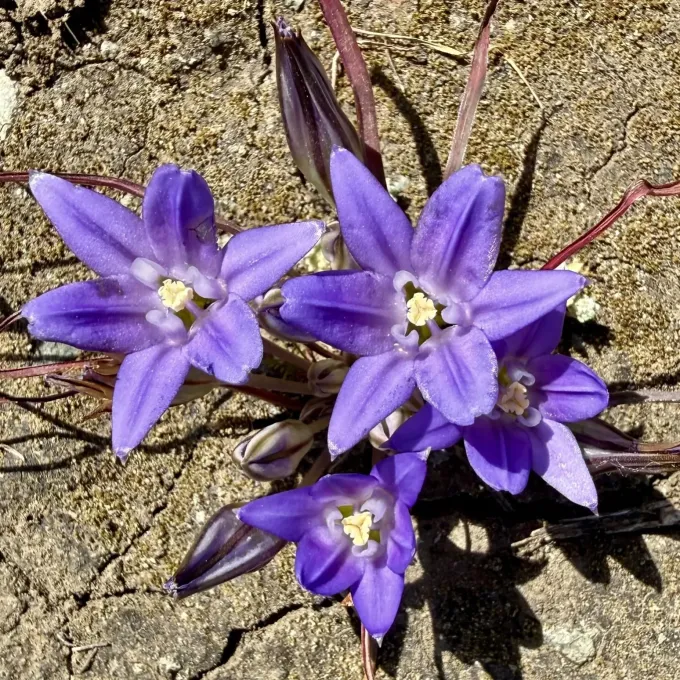
Description
Sowing dates
Planting Brodiaea terrestris bulbs is best performed in the autumn, allowing them to establish a root system during the cool, moist months. This timing is essential for triggering the vernalization process required for optimal blooming.
In regions with severe winters, spring planting is a viable alternative once the soil temperature has consistently warmed above 8–10 degrees Celsius. Ensure bulbs are planted at a depth of 5 to 10 centimeters to balance stability and emergence speed.
Spacing requirements involve placing bulbs approximately 10–15 centimeters apart to prevent competition for nutrients and light. Proper spacing also facilitates airflow, which is critical in preventing fungal development within the plant cluster.
For cultivation in heavy or dense soils, a layer of horticultural sand should be placed at the bottom of the planting hole. This creates an essential drainage buffer, preventing the moisture saturation that leads to bulb rot.
Propagation through seeds requires a period of cold stratification followed by sowing in nursery trays. Seedlings grow slowly and require consistent care, typically reaching flowering maturity in their third or fourth year of development.
Growing requirements
As a member of the Asparagaceae family, Brodiaea terrestris thrives in environments that mimic its native Mediterranean-like climate. It requires full solar exposure to produce its characteristic vibrant blooms and healthy, grass-like foliage.
The ideal soil for this crop is a light, well-draining sandy loam with a neutral pH. The soil structure must allow for rapid water movement, as the plants are highly susceptible to damage if water is allowed to pool around the bulb during dormancy.
Watering management is a delicate balance: the crop requires adequate moisture during the active vegetative growth phase but must be kept relatively dry during its summer dormant period to ensure the health of the bulb.
Thermal regulation is significant; while hardy to light frosts, the plants benefit from organic mulching in colder regions. Mulch serves to stabilize soil temperature fluctuations and protect the bulb against deep freezing.
Nutrient management involves applying balanced liquid fertilizers during the early stages of spring growth. Excessive nitrogen should be avoided to ensure strong stems and prevent the foliage from becoming overly susceptible to common diseases.
Main diseases and pests
The primary insect pest for Brodiaea terrestris is the onion maggot, which feeds on the developing bulb tissue. Preventive soil treatment with approved systemic insecticides is often necessary in areas where this pest is endemic.
Fungal pathogens such as Fusarium wilt and botrytis are common if drainage is poor or humidity levels remain high for extended periods. Fungicide treatment of bulbs prior to planting is a standard practice to reduce these risks.
Nematodes can infest the root system, causing stunted growth and distorted foliage. Strict adherence to crop rotation cycles—avoiding the same location for at least 4–5 years—is the most effective cultural control method.
Gastropods, particularly slugs and snails, often feed on the tender young leaves in spring. The use of barrier traps or integrated pest management strategies is recommended to protect the crop's aesthetic value.
Small rodent populations may pose a threat by digging up and consuming stored bulbs during the winter months. Protecting bulb beds with buried wire mesh is a highly effective way to prevent significant economic losses.