
Brodiaea hybrids
Brodiaea hybrids
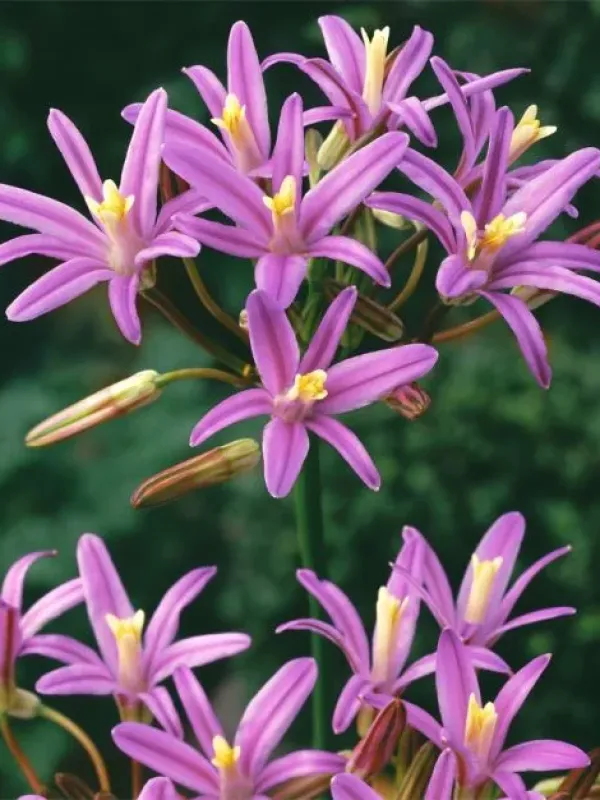
Description
Sowing dates
The planting of Brodiaea hybrids is ideally performed in the autumn when the soil begins to cool down. In colder regions, where frost may damage young bulbs, it is recommended to plant them in early spring after all danger of frost has passed.
Select a location with loose, well-drained soil to prevent water logging, which is critical for bulb health. Bulbs should be planted at a depth of approximately 7 to 10 centimeters, with a spacing of 10 to 15 centimeters between plants.
If planting in the spring, consider pre-sprouting the bulbs in a cool room to give them a head start. This technique ensures a more uniform growth rate once they are moved into the garden beds.
Proper soil preparation is essential; incorporate phosphorus and potassium-rich fertilizers to support root development. Avoid nitrogen-heavy fertilizers at the time of planting to prevent weak, leggy growth.
Treating bulbs with a fungicide before planting can significantly reduce the risk of soil-borne pathogens. This simple preventive measure helps ensure a stronger start for your Brodiaea garden.
Growing requirements
Brodiaea hybrids belong to the Asparagaceae family and are highly valued for their delicate, funnel-shaped flowers. They are excellent for naturalizing in rock gardens or as part of mixed perennial borders.
These plants thrive in full sun but can tolerate partial shade, especially in areas with very intense afternoon heat. Sandy or loamy soils with a neutral pH are ideal for ensuring proper drainage.
Watering should be moderate throughout the growing season. The soil must be kept moist but not saturated, as standing water can quickly lead to bulb rot, which is the most common cause of failure.
Air circulation is vital for healthy growth; do not crowd the plants too closely. In hot climates, applying a thin layer of mulch can help regulate soil temperature and conserve moisture around the roots.
Brodiaea hybrids are generally not fully hardy in freezing temperatures. In cold regions, it is necessary to lift the bulbs in late autumn and store them in a cool, dry place throughout the winter.
Main diseases and pests
Pests such as onion flies and thrips are common enemies of Brodiaea. These insects can damage both the foliage and the bulbs, leading to stunted growth or complete loss of the flowering season.
Fungal diseases like gray mold and various forms of rot are major threats, especially if soil drainage is inadequate. These infections usually manifest as softening of the bulb or moldy spots on the leaves.
Regular monitoring of the garden is essential to catch pest or disease issues early. Removing infested plants immediately prevents the spread of pathogens to neighboring healthy bulbs.
Slugs and snails can target tender new shoots during the spring season. Protecting the area with coarse grit or using organic bait can effectively manage these pests without harming the environment.
Practicing crop rotation is advised if you find a site is prone to fungal infection. By moving the planting location every few years, you interrupt the life cycle of soil-borne pests and diseases.
Harvesting
The bulbs should be harvested in late autumn after the foliage has naturally turned yellow and died back. This stage is crucial as the bulb absorbs remaining energy for the next growing season.
Carefully extract the bulbs from the soil and clean off any excess dirt. Allow them to dry in a well-ventilated, shaded area for several days to cure properly before long-term storage.
During the sorting process, discard any bulbs that appear soft, discolored, or show signs of physical damage. Keeping only healthy, firm bulbs ensures success for the following year.
Store the cured bulbs in mesh bags or trays that allow air to circulate freely. Keeping them in a cool, dry environment with temperatures around 5 to 8 degrees Celsius is optimal for dormancy.
In addition to garden use, Brodiaea is a popular cut flower. Its long, elegant stems and lasting blooms make it a staple in professional floristry and home decor bouquets.