
California brodiaea
Brodiaea californica
Description
Sowing dates
Planting of California brodiaea occurs in the autumn months, typically between late September and October. It is crucial to ensure that the bulbs are planted before the ground freezes, allowing for essential root establishment.
In colder regions, spring planting is a viable alternative once the soil has completely thawed and warmed up, usually in April. Note that spring-planted bulbs may show a slightly delayed flowering schedule compared to autumn planting.
The ideal planting depth for the bulbs is between 7 and 10 centimeters, depending on the bulb size and local soil texture. Spacing should be maintained at 10 to 15 centimeters to allow for optimal growth and airflow.
Before planting, the soil must be prepared with organic matter to improve drainage and nutrient content. A sandy or loamy soil composition is preferred to mimic the natural conditions of its original Californian habitat.
Always inspect the bulbs before planting, ensuring they are firm and free from rot or mechanical damage. Applying a preventative fungicide treatment is a recommended practice to avoid early fungal infections in the soil.
Growing requirements
California brodiaea thrives in locations receiving full sun for most of the day, though partial shade is tolerated. Being a member of the Asparagaceae family, it requires sufficient light to ensure vibrant flower production.
Excellent drainage is the most critical requirement for this species. It is susceptible to root rot if water lingers around the bulbs, so planting on elevated beds or ensuring high soil porosity is highly advisable.
The plant demonstrates moderate drought tolerance due to its Mediterranean origin. However, regular and moderate watering during the active growing season will significantly improve the quality and duration of the blooms.
Optimal growth occurs at temperatures between 18 and 22 degrees Celsius. During the flowering period, it is beneficial to protect the plant from strong winds to prevent the tall, slender stalks from bending or snapping.
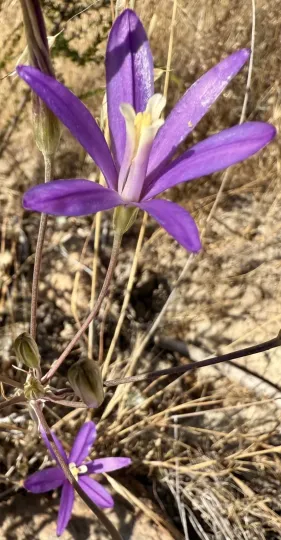
Botanically, the plant features basal leaves and spectacular umbel-shaped inflorescences with violet-blue, funnel-shaped flowers. It is a perennial plant that undergoes a dormant period after the flowering cycle concludes.
Main diseases and pests
Fungal diseases such as Fusarium rot are the primary threats, especially in heavy or waterlogged soils. These pathogens can rapidly destroy the bulbous root system, leading to the total collapse of the plant.
Pests like the onion fly can cause significant damage by laying eggs near the base of the plant. The emerging larvae burrow into the bulbs, which inevitably compromises the plant's structural integrity and overall vigor.
Aphid infestations are common during the bud-development stage, as they target the succulent tissues of the stalks. Such attacks can lead to stunted growth and deformed, unattractive flower clusters.
Slugs and snails frequently feed on the young foliage during the spring. Implementing physical barriers, such as copper tape or organic mulch, helps manage these pests without harsh chemicals.
Consistent agricultural management, including crop rotation and strict sanitary practices for bulbs, remains the most effective defense. Monitoring the plants regularly allows for early detection and intervention against potential outbreaks.
Harvesting
Seed harvesting should be performed once the capsules have turned brown and reached full maturity. It is essential to collect them before the capsules split open to avoid losing the seeds to the surrounding soil.
If the intention is to lift the bulbs for storage, this must be done only after the foliage has naturally yellowed and died back. This dormancy stage ensures that nutrients are fully stored within the bulb.
After lifting, clean the bulbs gently of excess soil and allow them to cure in a dry, shaded, and well-ventilated area. Properly cured bulbs are far more resistant to decay during the dormant winter storage period.
Store the clean, dry bulbs in a cool, dark environment at temperatures ideally below 15 degrees Celsius. Breathable containers, such as paper bags or mesh crates, are perfect for maintaining the necessary airflow.
For cut flower use, harvest the stems when the first few florets in the umbel begin to open. With regular water changes, these elegant stems can last up to two weeks in an indoor floral arrangement.