
Camassia cusickii
Camassia cusickii S. Watson
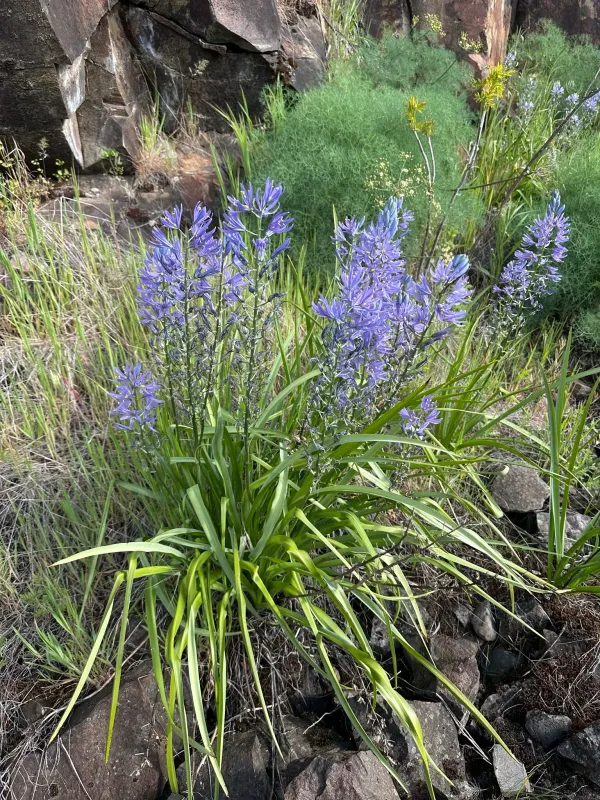
Description
Sowing dates
Planting bulbs of Camassia cusickii is best performed in the autumn, allowing the plants to establish their root systems before the onset of winter dormancy.
For colder climates, late September to early October is ideal, ensuring the ground is still workable and the bulbs have time to acclimate to their new environment.
The planting site should be prepared with loose, friable soil, ensuring that there is no risk of waterlogging, which is critical for the long-term health of the bulbs.
Space the bulbs approximately 15 to 20 centimeters apart to allow for proper foliage development and to accommodate the future expansion of the bulb clumps.
The planting depth should be around 10–15 centimeters, which provides sufficient protection against fluctuating temperatures while allowing for healthy shoot emergence in spring.
Growing requirements
Camassia cusickii belongs to the Asparagaceae family and is native to the Pacific Northwest of the United States, typically found in moist, sub-alpine mountain meadows.
The plant thrives in fertile, moisture-retentive soils, yet it requires good drainage to prevent the rotting of the bulbs during periods of excessive rainfall.
While the species prefers sunny locations to produce its signature pale blue, star-shaped inflorescences, it can tolerate light shade during the hottest parts of the day.
The optimal pH range for this species is neutral to slightly acidic, and it benefits from the incorporation of organic matter into the planting area annually.
Botanically, it is distinguished by its broad, glaucous leaves and tall, raceme-like flower spikes that can reach up to one meter in height under ideal conditions.
Main diseases and pests
Rodents such as voles and mice are significant pests that may feed on the bulbs, especially during the dormant season, necessitating protective measures.
Fungal pathogens and bulb rot often occur when the soil remains saturated for extended periods, especially during the late winter and early spring thaw.
Slugs and snails are known to graze on the succulent foliage in early spring, which can stress the plant and temporarily inhibit its growth cycle.
Good cultural practices, such as maintaining weed-free beds and ensuring adequate spacing, help to minimize the risk of spreading foliage diseases.
- Use of gravel in the hole for drainage.
- Protection of beds with wire mesh for rodents.
- Regular soil cultivation to encourage aeration.