
Brabejum
Brabejum
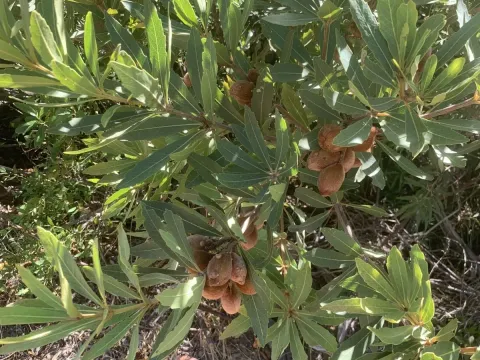
Brabejum (Brabejum stellatifolium) is the sole member of its genus within the Proteaceae family, native to the Western Cape of South Africa. This evergreen shrub or small tree is typically found in moist, riparian habitats, often sheltered by forest cover.
What the section contains

Brabejum
The plant requires specific soil conditions, thriving in acidic, well-draining soils rich in organic matter. Proper water management is critical, as the species relies on constant moisture but is highly susceptible to root decay if water stagnation occurs.
Climatic requirements are restricted to Mediterranean-style environments with mild winters. Brabejum cannot withstand hard frosts, which limits its outdoor agricultural cultivation to specific subtropical or coastal zones that mimic its native range.
Botanically, the species is identified by its whorled leaves and distinct spikes of small, white to pale-pink flowers. It serves as a significant nectar source for local pollinators, contributing to the biodiversity of its native ecosystems.
Economically, Brabejum is primarily known for its seeds, historically called wild almonds. Due to the presence of toxic cyanogenic glycosides, raw seeds are inedible; they must undergo prolonged processing, including soaking and roasting, before they can be safely consumed or used as a coffee substitute.
Root rot, primarily caused by Phytophthora species, remains the most significant threat to Brabejum in cultivation. Ensuring excellent drainage is the primary defense strategy against this destructive pathogen.
Pests such as scale insects and mealybugs often cluster on the stems and undersides of leaves, extracting sap and weakening the plant. Regular monitoring during the active growth phase is essential for timely intervention.
Leaf-eating caterpillars can cause substantial defoliation if left unchecked. Integrated pest management, focusing on biological controls or targeted applications, is recommended to preserve the plant's health.
Soil pH management is crucial, as the plant is adapted to acidic environments. Exposure to alkaline soils leads to severe nutrient deficiencies, primarily iron chlorosis, which compromises the plant's ability to resist secondary infections.
Environmental stress, particularly sudden drought or extreme heat, can cause physiological damage to the foliage. Maintaining mulch layers around the root zone helps stabilize soil temperature and moisture levels, mitigating these risks.