
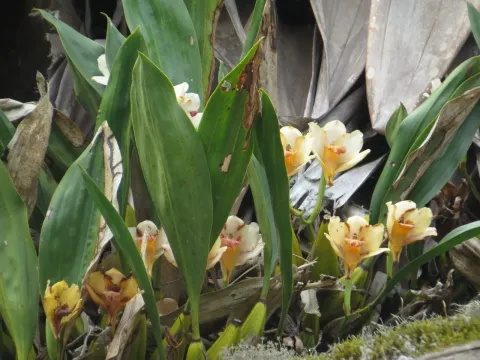
Bifrenaria
Bifrenaria
Bifrenaria is a genus of epiphytic and lithophytic orchids belonging to the Orchidaceae family. Native primarily to the tropical forests of Brazil, these plants are known for their sturdy pseudobulbs and fragrant, often long-lasting flowers.
What the section contains


Bifrenaria
In terms of cultivation, light is the most critical factor. Bifrenaria thrives in bright, filtered light. During the growing season, ensure the plant receives enough light to strengthen the pseudobulbs, which is essential for consistent annual blooming.
Temperature requirements are generally moderate. The plants prefer a cycle that includes a distinct drop in temperature during the night. A diurnal variation helps stimulate the development of new flower spikes after the dormant period.
The potting medium must provide excellent aeration. Because these plants are epiphytes, their roots need to breathe. High-quality pine bark mixed with perlite or charcoal is recommended to ensure that water drains rapidly after every irrigation.
Water management is crucial. While these plants prefer high humidity, they should never sit in stagnant water. Allow the substrate to dry out significantly between watering sessions to prevent the development of root and bulb rot.
The most common threats to Bifrenaria are fungal and bacterial infections, usually triggered by poor air circulation and excessive moisture. These pathogens can cause pseudobulbs to turn black and soften rapidly.
Scale insects are frequent pests that attach themselves to the undersides of leaves and the surfaces of pseudobulbs. These insects are difficult to detect early and can significantly drain the plant's energy if not treated promptly.
Spider mites are another major concern, especially in environments where humidity drops below 50 percent. They thrive in dry air and can cause severe damage to the foliage, resulting in a stunted appearance.
Effective management includes regular inspection and the use of insecticidal soaps or systemic pesticides. Biological controls can also be effective in large collections to reduce the reliance on harsh chemicals.
Maintaining high hygiene standards in the growing area is essential. Removing debris, dead leaves, and using sterilized pots and tools helps prevent the spread of diseases within an orchid collection.