
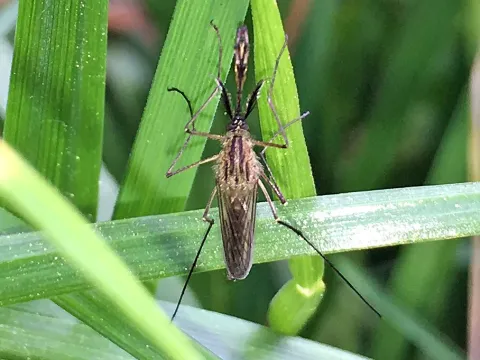
Rustic mosquito
Aedes rusticus
The rustic mosquito (Aedes rusticus) is a large species of blood-sucking mosquito belonging to the order Diptera, family Culicidae. Adult specimens are characterized by a yellowish-brown coloration with prominent light-colored scales on the thorax and abdomen.
What the section contains
Rustic mosquito
This species is highly adapted to temperate climates. Females possess a robust proboscis designed to pierce the skin of warm-blooded organisms, making them active vectors for various diseases within agricultural ecosystems.
The larvae of Aedes rusticus develop in water, preferring temporary forest pools, floodplains, and ditches rich in decaying leaf litter. They progress through four larval stages, feeding actively on microorganisms and organic particles suspended in the water.
The mosquito pupa is also an aquatic stage, highly mobile and capable of diving quickly to the bottom when threatened. This stage lasts for a relatively short period before the pupa emerges as an adult winged insect, known as an imago.
Imagines of this species are primarily crepuscular, though they may remain active throughout the day during overcast weather or in dense vegetation, causing significant disturbance to farm workers and livestock.
While Aedes rusticus does not feed on plant tissues, its activities cause indirect harm to agriculture. The primary damage involves reduced livestock productivity due to constant stress caused by mass attacks from these insects.
On farms located near forest areas, a decrease in milk yield and slower weight gain in young stock are observed during peak mosquito seasons. Animals expend energy trying to ward off insects rather than focusing on growth and development.
Furthermore, the mosquito acts as a vector for pathogens that can affect both domestic animals and humans working in the fields. This poses additional health risks to personnel and limits the window for performing field operations during certain hours.
In nurseries and forest management areas, high populations of adult mosquitoes hinder scheduled agrotechnical tasks. Workers are often forced to reduce time spent in open fields, leading to delays in seedling care and maintenance.
Indirect costs also manifest in the need for repellents and protective infrastructure for livestock facilities. These expenses significantly increase the production costs of agricultural products in regions with high population densities of this species.
The life cycle of Aedes rusticus is closely tied to the seasonal filling of water bodies. The emergence of the first generation of imagines usually occurs in early spring, as soon as meltwater in forest areas begins to warm up.
Multiple generations can develop throughout the season if climatic conditions and moisture availability permit. The peak population of adult mosquitoes typically occurs in late spring and early summer, when temperature regimes are most favorable for metamorphosis.
In autumn, females begin preparing for diapause, often accompanied by increased aggressiveness in searching for a blood meal. This period is characterized by the highest population density of insects near forest edges and gardens.
The mosquito eggs are highly resistant to desiccation and low temperatures, allowing them to successfully overwinter in soil litter or at the bottom of dried-up pools while awaiting the spring rise in water levels.
Thus, the pest's activity season spans almost the entire plant vegetation period, starting in March and ending with the arrival of persistent cold weather in October or November.
The first sign of the species' presence is the observation of buzzing insect swarms near forest margins and shaded, moist areas. The intensity of the humming increases during evening hours, serving as a clear indicator of high pest concentration.
The presence of temporary water bodies, stagnant puddles, and abundant decaying organic matter directly points to potential breeding sites. If the surface of such water is "teeming" with tiny larvae, it indicates a current generation of Aedes rusticus.
Behavioral changes in livestock, such as huddling together and constant tail-flicking or ear-twitching, are clear symptoms of mass attacks by blood-sucking mosquitoes on the premises.
The presence of large numbers of pupae in water, which dive to the depths at the slightest disturbance, confirms an active reproductive stage of the species. This serves as a signal for the need for immediate intervention in the water body's ecosystem.
For humans, being in the species' habitat is marked by multiple bites, causing intense itching and local allergic reactions, which serves as an indirect but reliable sign of the area being inhabited by this mosquito species.
Land reclamation is the most effective method for long-term control. Draining temporary forest pools, leveling micro-reliefs, and preventing rainwater stagnation deprives the pest of sites for egg-laying and larval development.
The use of biological agents based on Bacillus thuringiensis israelensis allows for the targeted destruction of larvae in water bodies without harming beneficial aquatic organisms, fish, or plants. This is a safe and environmentally friendly method.
Installing insect traps powered by carbon dioxide or ultraviolet light helps reduce the concentration of imagines in agricultural territories and around production zones during periods of peak activity.
Protection for livestock includes the application of veterinary repellents and the use of mesh enclosures for grazing and stabling areas, which minimizes stress and the risk of infection transmission.
The use of broad-spectrum insecticides for treating areas adjacent to forests is justified only in emergencies and requires strict adherence to regulations to ensure the local entomofauna balance is not disrupted and beneficial pollinators are not harmed.