
Psorophora ferox
Psorophora ferox
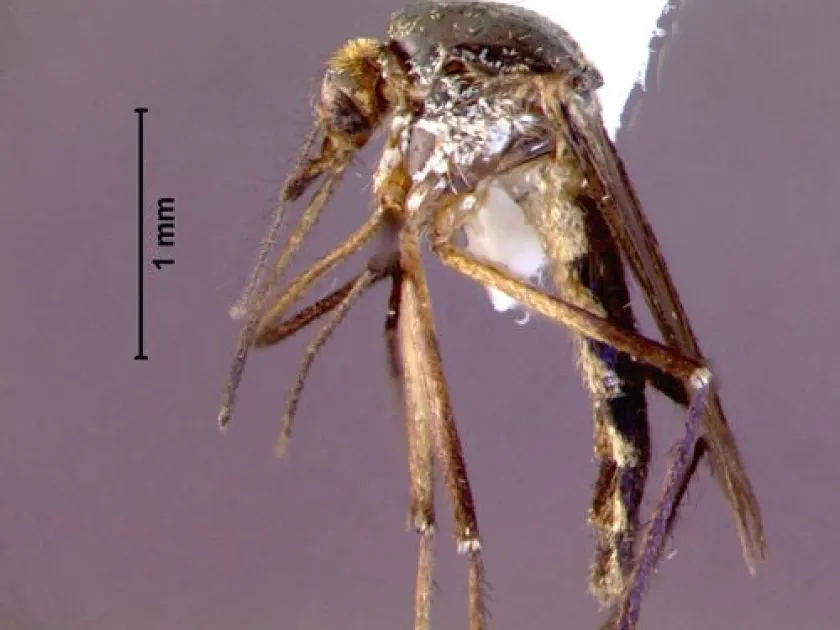
Description
How to identify
Psorophora ferox is a large mosquito species belonging to the Culicidae family. It is easily recognized by its dark, often metallic coloration and the distinctive white scales on its legs.
The wings of this mosquito are covered in dark scales, which gives them a dense, shadowy appearance. This feature is a primary diagnostic character for field identification of the species.
As a member of the order Diptera, it undergoes complete metamorphosis, passing through egg, larval, pupal, and adult stages. The eggs are known for being drought-resistant.
This species is highly aggressive and is known for attacking during the daylight hours, particularly in wooded or shaded environments. This behavior distinguishes it from many nocturnal mosquito species.
The biological cycle is tightly linked to water availability. The adults are strong fliers, capable of dispersing over significant distances from their initial breeding grounds to find hosts.
What it damages
The primary agricultural impact of Psorophora ferox is the severe annoyance and blood loss caused to livestock. Continuous biting leads to high levels of stress within herds.
Animals subjected to frequent attacks exhibit reduced grazing efficiency, lower weight gain, and diminished milk production. The constant movement of cattle to escape biting prevents them from feeding properly.
Furthermore, these mosquitoes act as potential vectors for various diseases, posing a health risk to both domestic animals and wildlife through the transmission of pathogens.
For humans, the bite of Psorophora ferox is often painful and triggers significant inflammatory responses, including localized swelling, redness, and intense itching.
The cumulative economic impact includes reduced livestock productivity, the cost of pest management interventions, and the necessity of providing protective measures for farm personnel.
When it appears
The seasonal prevalence of this mosquito is primarily determined by rainfall patterns. Populations surge following heavy rains that create temporary, shallow pools in wooded areas.
Development is fastest during warm summer months, when high temperatures accelerate the larval stage, leading to a rapid increase in adult population numbers.
The ability of the eggs to remain dormant in the soil for extended periods allows the species to persist through temporary dry spells, emerging quickly once favorable conditions return.
Adults are most active during the day in shaded areas or during twilight, taking advantage of humidity to protect themselves from desiccation while seeking a blood meal.
In many regions, multiple overlapping generations can occur throughout the wet season, maintaining high pest pressure until the onset of consistently drier or colder weather.
Control measures
The most effective long-term control strategy is environmental management, specifically the drainage or elimination of temporary stagnant water pools where larvae develop.
Biological control methods, such as applying Bacillus thuringiensis israelensis (Bti) to known breeding sites, effectively target larvae without harming the broader ecosystem.
For livestock, the use of physical barriers, such as mesh screens in shelters and fans to create airflow, can significantly reduce the impact of mosquitoes during peak activity.
Personnel working in infested areas should utilize personal protective equipment (PPE), such as long-sleeved clothing and DEET or picaridin-based repellents.
- Leveling land to prevent temporary water collection.
- Implementing integrated pest management (IPM) programs.
- Using insecticide-treated netting around livestock enclosures.
- Monitoring rainfall to anticipate peak emergence cycles.
Taxonomy
- Latin name
- Psorophora ferox
- Order
- Diptera (flies)
- Family
- Culicidae
- EPPO code
- PSOPFE
Discussion
No discussions yet — be the first.