
Salt marsh mosquito
Aedes cantator
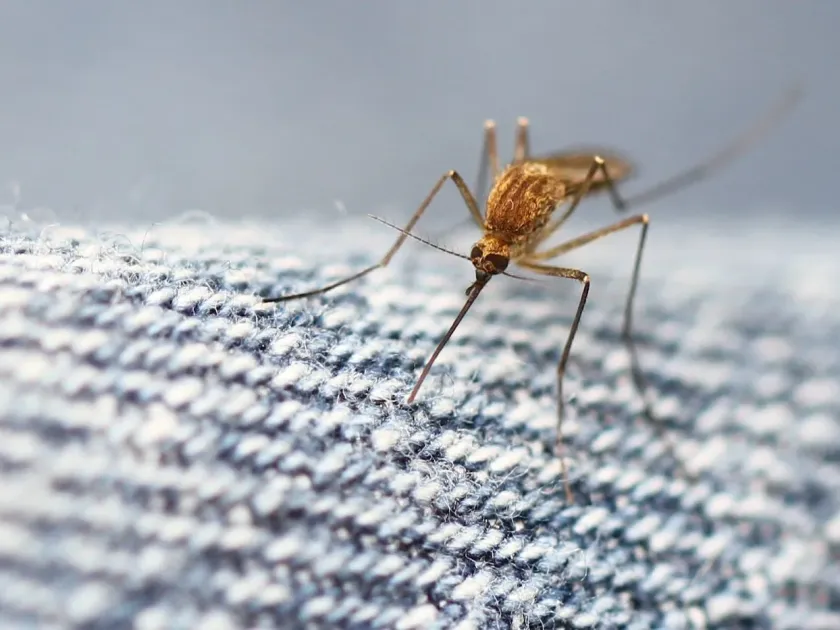
Description
How to identify
The salt marsh mosquito (Aedes cantator) belongs to the order Diptera and the family Culicidae. This species is well-known for its aggressive biting behavior and its ability to thrive in coastal brackish water environments.
Adult mosquitoes are typically grayish-brown in color, with distinctive pale scales covering parts of their body. They usually measure between 5 and 7 millimeters in length, making them a conspicuous pest during their peak activity season.
The biology of Aedes cantator is specifically adapted to coastal salt marshes. Females deposit their eggs in moist soil that is subject to periodic tidal flooding, which serves as a crucial trigger for the hatching of the larvae.
Larvae develop in saline water bodies, consuming organic debris and microorganisms. The larval stage consists of four instars, followed by the pupal stage, where the mosquito undergoes metamorphosis before emerging as an adult.
The life cycle is highly sensitive to climatic conditions, specifically temperature and moisture levels. Rapid development in the summer months allows the species to build up large populations quickly in response to favorable environmental cues.
What it damages
While Aedes cantator does not directly consume or damage crops, its presence causes significant economic losses in the agricultural sector. The nuisance factor severely limits the labor force's ability to work effectively in fields near coastal areas.
Agricultural productivity drops when workers are forced to limit their time outdoors due to relentless mosquito attacks. This leads to delays in harvesting, planting, and general crop maintenance tasks, which can negatively impact overall yields.
In the livestock industry, these mosquitoes act as a major source of stress. High levels of mosquito activity cause animals to become agitated, leading to decreased feed intake, reduced milk production, and lower weight gain in cattle and sheep.
Beyond the direct impact on welfare, mosquitoes are potential vectors for various diseases that affect livestock. Outbreaks of mosquito-borne pathogens can necessitate emergency veterinary interventions and additional management costs for farmers.
The economic burden is further compounded by the need to invest in large-scale control operations and personal protective equipment for staff, which adds to the operating expenses of farms located in affected zones.
When it appears
The adult activity of Aedes cantator typically begins in late spring as coastal waters and soils warm up. The peak of their population size usually occurs during the mid-summer months, often following high tide events or heavy rains.
These mosquitoes are most active during the crepuscular periods—dawn and dusk—and on overcast days. Their behavior is highly tuned to avoid excessive solar radiation, which makes these specific times the most difficult for agricultural activities.
Activity gradually declines as the weather cools in autumn, though it can persist until the first hard frosts. The survival of the species is largely dependent on the resilience of their eggs, which can endure extreme drying in the soil.
The ability of the eggs to remain dormant in the soil for extended periods is a key adaptation, allowing the species to survive winter and reactivate when conditions are right. This ensures the survival of the species across different years.
Understanding the local seasonal patterns is critical for farmers to plan their operations. By predicting peak activity windows, they can minimize exposure and schedule field tasks when mosquito density is at its lowest.
Control measures
Management strategies primarily focus on larval control in their breeding sites. Biological larvicides, such as specific bacterial strains, are highly effective and environmentally friendly, as they target only the larvae without harming beneficial wildlife.
Hydro-management, including the drainage of stagnant pools and the maintenance of water channels in marshlands, is a highly effective long-term strategy. Removing breeding sites significantly reduces the emergence of new adult generations.
On-farm protection involves the use of screens, mosquito traps, and safe-to-use repellents for workers. In livestock housing, the use of automated insect control systems can significantly improve animal welfare and reduce disease transmission risks.
Strategic scheduling of labor is an essential operational tool. By avoiding dawn and dusk activities in high-risk areas, farm managers can prevent the worst of the biting intensity, keeping staff productive and comfortable.
- Application of biological larvicides in breeding pools
- Improving drainage in salt marsh zones
- Installation of insect-proof screens and traps
- Strategic planning of outdoor field activities
Taxonomy
- Latin name
- Aedes cantator
- Order
- Diptera (flies)
- Family
- Culicidae
- EPPO code
- AEDSCN
Discussion
No discussions yet — be the first.