
Psorophora howardii
Psorophora howardii
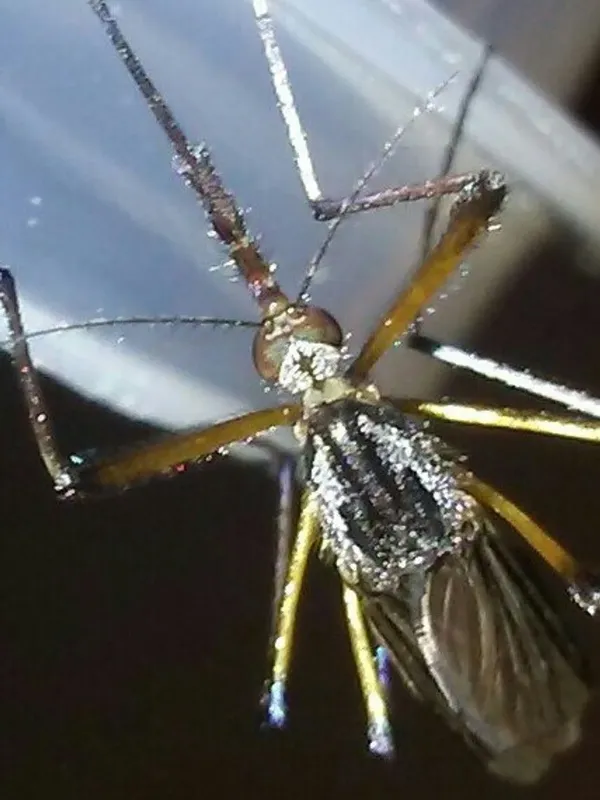
Description
How to identify
Psorophora howardii is a notably large species of floodwater mosquito within the Culicidae family, recognized for its aggressive biting behavior and robust size.
Adults are typically dark-colored and possess distinct scales on their wings, which aid in identification. Their proboscis is highly adapted for piercing the thick skin of mammals.
The larvae are opportunistic predators, often found in temporary rain pools where they feed on other aquatic organisms, including larvae of other mosquito species.
The life cycle is tightly synchronized with flood events; eggs are laid in soil depressions and remain dormant until submerged by heavy rainfall or seasonal flooding.
This species is widely distributed throughout parts of North America, favoring open agricultural landscapes where large mammals are available as blood hosts.
What it damages
This species is not a crop pest in the traditional sense, but it acts as a significant economic pest for the livestock industry due to its intense blood-feeding habits.
Repeated, painful bites cause severe stress and agitation in cattle, which significantly disrupts normal grazing and resting patterns of the herd.
The constant annoyance results in weight loss in beef cattle and a marked reduction in milk production for dairy cows, impacting overall farm profitability.
Livestock may suffer from secondary injuries as they attempt to swat away the insects, leading to skin lesions and increased vulnerability to infections.
Furthermore, Psorophora howardii is a potential vector for various pathogens, posing additional sanitary risks to the animal population on agricultural holdings.
When it appears
The seasonal occurrence of Psorophora howardii is dictated primarily by the pattern of rainfall and the subsequent formation of floodwater breeding sites.
Activity peaks occur during the warmer months, particularly following heavy storm events that flood low-lying areas where dormant eggs are present.
The development from egg to adult is exceptionally rapid under favorable warm and humid conditions, allowing for multiple generations during a single wet season.
Adults are most active during dawn and dusk, although they may persist in shaded areas throughout the day if disturbance occurs.
The population density is highly variable from year to year, depending entirely on the frequency and intensity of environmental moisture cycles.
Control measures
The primary control strategy involves environmental management, specifically the drainage or modification of temporary pools to eliminate larval breeding habitats.
Biological control agents, such as formulations of Bacillus thuringiensis israelensis (Bti), are effective in treating water bodies to kill larvae without harming livestock.
On-animal protection, including the use of insecticide-impregnated ear tags or topical pour-on repellents, is crucial for mitigating the impact on cattle.
Vegetation management around pastures, such as mowing weeds and tall grasses, reduces the resting sites for adult mosquitoes, thus lowering their density near livestock.
Integrated pest management (IPM) programs should monitor rainfall patterns to predict emergence and apply targeted control measures precisely when needed.
Taxonomy
- Latin name
- Psorophora howardii
- Order
- Diptera (flies)
- Family
- Culicidae
- EPPO code
- PSOPHO
Discussion
No discussions yet — be the first.