
Salt marsh mosquito
Culex salinarius
Description
How to identify
The salt marsh mosquito (Culex salinarius) is a member of the Culicidae family within the order Diptera. This species is widely distributed in coastal and inland wetland areas, often thriving in waters with high organic content.
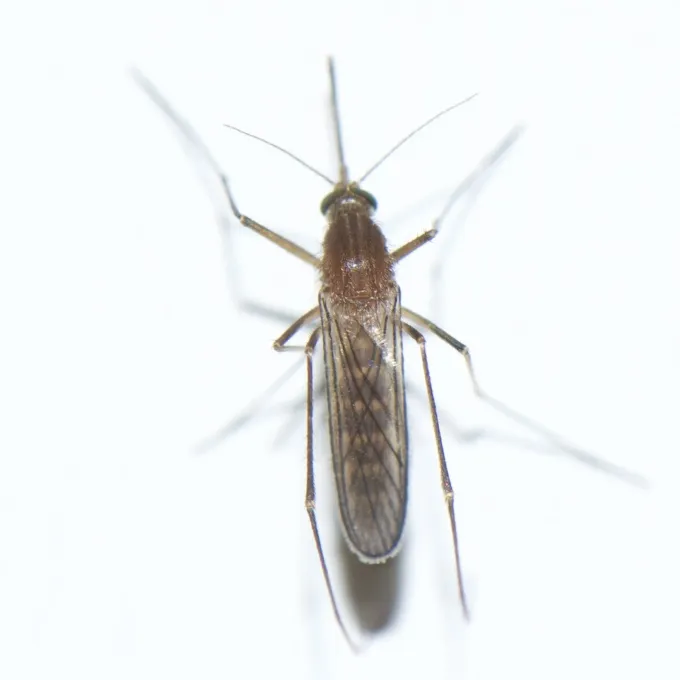
Adult Culex salinarius are medium-sized mosquitoes, typically exhibiting a brownish or greyish appearance. They are morphologically similar to other Culex species, possessing a slender body and a long, piercing-sucking proboscis adapted for feeding on blood.
The larvae of this mosquito develop in stagnant or slow-moving water. They are known for their ability to tolerate a wide range of salinity levels, which allows them to colonize habitats that other mosquito species might avoid.
Their life cycle consists of four stages: egg, larva, pupa, and adult. The speed of this cycle depends on environmental temperature, which is a critical factor in their population growth within agricultural regions.
These insects are highly adaptable, capable of exploiting artificial containers, drainage ditches, and irrigation systems, making them a persistent pest in managed landscapes.
What it damages
While Culex salinarius does not feed on crops, it exerts a significant negative economic impact on livestock production. The presence of these mosquitoes causes extreme distress and annoyance to cattle, sheep, and other farm animals.
Constant biting behaviour leads to reduced grazing efficiency as animals spend more time swatting away insects and less time feeding. This directly impacts milk production and weight gain, resulting in financial losses for the producer.
The bites can cause severe skin irritation, secondary bacterial infections, and allergic reactions, which require constant monitoring and veterinary care to mitigate.
As vectors for various viruses and pathogens, these mosquitoes can pose a threat to the health of the herd, necessitating expensive prophylactic measures and vaccination programs.
In addition to livestock impact, the high density of adult mosquitoes can significantly hinder human labor efficiency, creating a hostile environment for farm workers during evening hours.
When it appears
The seasonal activity of Culex salinarius is primarily driven by temperature and precipitation patterns. Emergence typically begins in early spring as water temperatures rise, creating suitable conditions for larval development.
The peak population density usually occurs during the height of the summer, particularly following heavy rain events that create an abundance of temporary breeding sites across the landscape.
Multiple generations can occur throughout the growing season, allowing the population to bounce back quickly after localized control efforts are carried out.
As temperatures begin to drop in autumn, their activity gradually decreases, though they can remain present and active during milder late-season periods in warmer climates.
Understanding these seasonal patterns is crucial for timing control operations, especially when using larval treatments before the population reaches its summer peak.
Signs of infestation
A primary indicator of a Culex salinarius infestation is the visual observation of large swarms of mosquitoes, especially during dawn and dusk hours near pastures or water bodies.
Monitoring the aquatic environment with standard sampling tools will reveal the presence of larvae in irrigation ditches, flooded fields, or stagnant drainage points on the property.
Livestock behaviour is a significant indicator; if animals appear unusually agitated, constantly shifting, or attempting to group together to avoid insect bites, it suggests a heavy infestation.
Skin lesions or unexplained restlessness in the herd often point towards chronic exposure to blood-feeding pests, requiring further inspection of the surrounding area.
The use of light traps or specialized mosquito traps can provide objective data on the adult mosquito population density, helping farmers to assess the severity of the threat.
Control measures
Effective management of Culex salinarius requires an integrated approach that prioritizes environmental modifications, such as draining stagnant water and improving drainage systems to eliminate breeding sites.
Biological control methods, particularly the application of Bacillus thuringiensis israelensis (Bti), are highly recommended as they specifically target larvae without harming non-target organisms or the environment.
Chemical control involving the use of insecticides for adult mosquitoes should be used strategically and as a secondary measure, ensuring it does not interfere with livestock safety or food quality standards.
Providing physical protection for animals, such as fans in barns, protective netting, and the use of approved insect repellents, can significantly improve livestock comfort and health.
- Improve site drainage and ditch maintenance.
- Apply Bti-based larvicides to breeding waters.
- Use physical barriers like netting in animal housing.
- Apply approved repellents to livestock.
- Regular monitoring of larval habitats.
Taxonomy
- Latin name
- Culex salinarius
- Order
- Diptera (flies)
- Family
- Culicidae
- EPPO code
- CULXSA
Discussion
No discussions yet — be the first.