
Saltmarsh mosquito
Aedes detritus
Description
How to identify
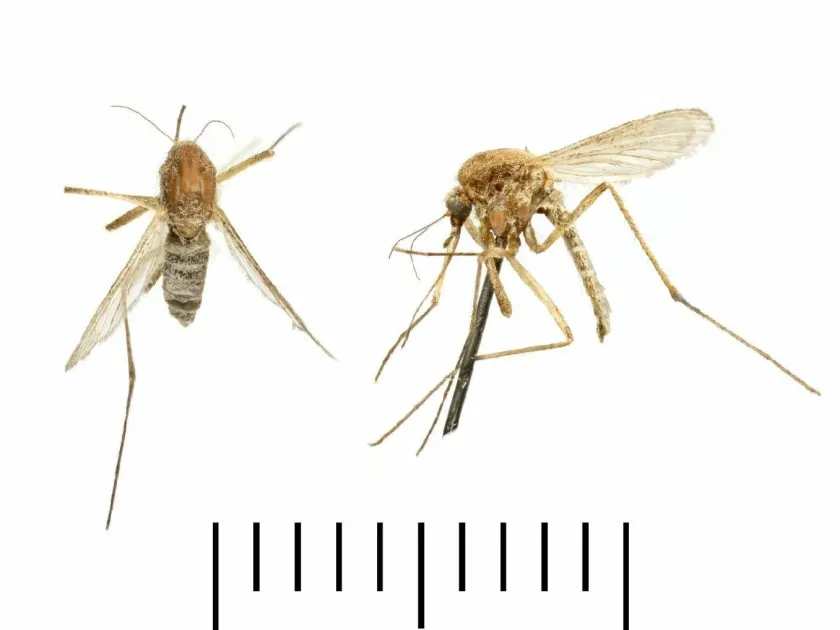
The saltmarsh mosquito (Aedes detritus) is a dipteran insect belonging to the family Culicidae. This species is specifically adapted to coastal areas characterized by brackish and saline water bodies.
Adults are medium-sized and possess a dark appearance with whitish scales on the thorax and abdomen. They are aggressive biters, making them a significant nuisance for both humans and livestock.
The eggs of this mosquito are highly resistant to desiccation, which allows them to remain dormant in saline soils until inundated by water, ensuring survival through harsh periods.
Larvae develop exclusively in brackish water, where the level of salinity is a critical factor for their survival and the speed of their maturation into the pupal stage.
While primarily a coastal species, adults are known for their ability to fly long distances, allowing them to invade agricultural settings far from their original breeding grounds.
What it damages
The primary agricultural impact of Aedes detritus is the severe disruption of labor efficiency. High-density swarms of mosquitoes make it difficult for field workers to perform essential tasks such as harvesting and maintenance.
Livestock are significantly affected by constant biting, which leads to increased stress and reduced animal welfare. This often results in lower milk production and poor weight gain in cattle.
The mosquitoes act as vectors for various diseases, requiring producers to invest more in veterinary care and livestock protection, which significantly increases operating costs.
Greenhouse operations situated near coastal areas face challenges as mosquitoes invade structures, requiring expensive modifications to facilities, such as installing specialized mesh screens.
The need for large-scale pest control measures in ecologically sensitive zones limits the options for using certain chemical pesticides, adding complexity to the farm management strategy.
When it appears
The activity cycle of Aedes detritus begins in early spring when temperatures increase, causing eggs in the soil to hatch upon inundation by rainwater or high tides.
Peak population levels typically occur during the summer months, with multiple generations emerging if moisture conditions remain optimal throughout the season.
Mass emergence events are closely linked to tidal cycles and rainfall patterns, which create the temporary saline pools required for larval development.
As autumn approaches, activity patterns begin to shift, with the population density decreasing as the weather cools down and enters the period of winter dormancy.
The resilience of the eggs ensures that the population can rapidly recover in the spring, making long-term management of breeding sites essential for effective control.
Control measures
Integrated Pest Management (IPM) for Aedes detritus focuses on habitat modification, specifically the drainage of temporary brackish pools that serve as breeding sites.
Biological control using Bacillus thuringiensis israelensis is highly recommended, as it specifically targets mosquito larvae while minimizing harm to non-target aquatic organisms.
For farm workers and livestock, barrier methods such as protective clothing, repellents, and physical screening on buildings provide immediate, necessary relief from bites.
Monitoring the adult population using specialized traps helps in timing insecticide applications or other interventions when population thresholds are exceeded.
- Draining stagnant water in low-lying coastal areas.
- Application of bacterial ларvicides (Bti).
- Installing fine mesh screens in agricultural buildings.
- Providing sheltered areas for livestock during peak flight hours.
Taxonomy
- Latin name
- Aedes detritus
- Order
- Diptera (flies)
- Family
- Culicidae
- EPPO code
- AEDSDE
Discussion
No discussions yet — be the first.