
Psorophora ciliata
Psorophora ciliata
Description
How to identify
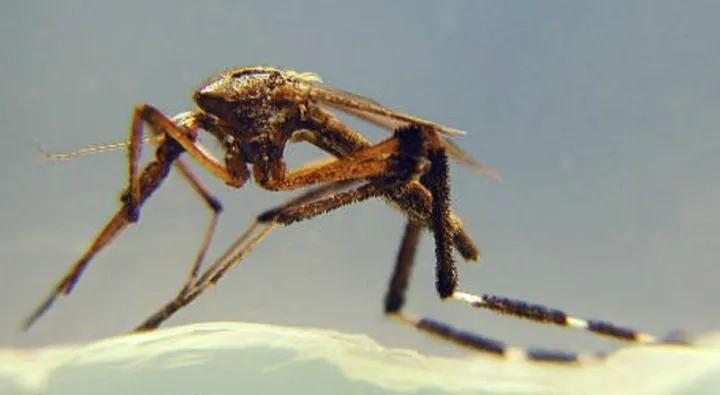
Psorophora ciliata, commonly known as the gallinipper, is a large species of mosquito in the family Culicidae. It is widely recognized by the dense, shaggy scales on its legs, which resemble eyelashes and provide the species with its unique appearance.
The adult mosquito is significantly larger than most common mosquito species. It typically displays a yellowish-brown coloration with distinct markings on the thorax, which helps in field identification.
The mouthparts of the female are highly adapted for piercing the skin of mammals, allowing them to draw blood efficiently. These insects are known for being aggressive and may bite during the day, which is atypical for many other mosquito species.
The larvae are predacious and feed on other mosquito larvae, which creates a unique ecological niche, although they remain a primary concern for agriculture due to adult behavior.
These mosquitoes are typically found in floodplains and pasture lands where temporary standing water provides the necessary breeding environment for their rapid development.
What it damages
While Psorophora ciliata does not directly consume or damage agricultural crops, it is a significant pest in the livestock industry. It targets cattle, horses, and other domestic animals, causing substantial stress and economic losses.
The painful bite of these large mosquitoes causes livestock to become restless and agitated. This persistent stress negatively impacts the animals' overall health, milk production, and weight gain rates.
Repeated bites can lead to severe skin irritation, secondary infections, and dermatitis in livestock, requiring extra labor and medical expenses to maintain animal health.
The presence of large populations of these insects often forces farmers to modify management practices, such as shifting grazing schedules or keeping animals indoors during peak activity hours.
In addition to physical harm, the irritation caused by swarming mosquitoes may reduce the overall efficiency of pasture utilization, as animals spend more time trying to avoid bites than grazing.
When it appears
The life cycle of Psorophora ciliata is heavily dependent on rainfall. Populations typically spike following heavy rain events that create temporary pools of standing water in pastures and low-lying areas.
The eggs have a remarkable ability to survive in dry soil for years, waiting for the right conditions of flooding and temperature to hatch. This resilience makes the species difficult to eradicate completely.
Adult activity peaks during the summer months, particularly from late June through August. The development from egg to adult can be very rapid, sometimes occurring in as little as one to two weeks under optimal conditions.
Temperature plays a crucial role in metabolic rates, with warmer weather significantly accelerating the development of the aquatic stages in small, temporary water bodies.
As autumn approaches, the activity level drops, and the species prepares for overwintering through eggs deposited in the soil, which remain dormant until the following season.
Control measures
Effective control of Psorophora ciliata focuses on water management and environmental modifications. Draining temporary pools and leveling low spots in pastures can significantly reduce breeding sites.
For livestock protection, the use of approved insecticides and repellents is essential. Applying insecticides to the coat or using ear tags can provide protection against these persistent biters.
Biological control agents, such as formulations containing Bacillus thuringiensis israelensis (Bti), can be applied to stagnant water sources to target larvae without harming the surrounding ecosystem.
Farm management strategies, such as keeping livestock in protected or well-ventilated barns during the hours of peak mosquito activity, can help mitigate the impact of the pest.
- Eliminate temporary breeding sites through improved drainage.
- Utilize veterinary-approved repellents and insecticides.
- Apply Bti-based bio-insecticides to standing water.
- Maintain livestock in sheltered areas during dusk and dawn.
- Monitor pasture conditions for signs of stagnant water pools.
Taxonomy
- Latin name
- Psorophora ciliata
- Order
- Diptera (flies)
- Family
- Culicidae
- EPPO code
- PSOPCI
Discussion
No discussions yet — be the first.