

Pest · Hemiptera (bugs, aphids, leafhoppers)
Blue alfalfa aphid
Acyrthosiphon kondoi
Description
How to identify
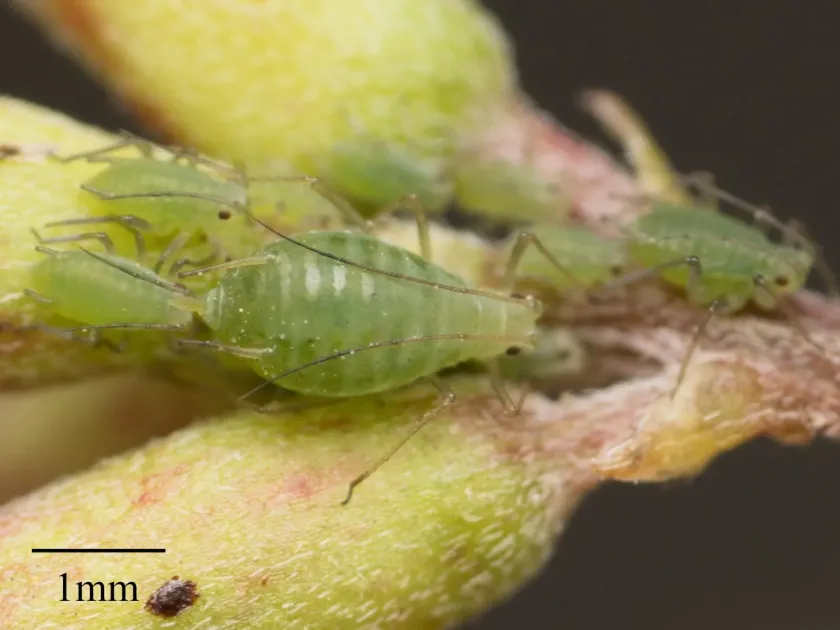
The Blue Alfalfa Aphid (Acyrthosiphon kondoi) is a small, soft-bodied insect belonging to the Aphididae family. Adults typically measure 2 to 2.5 mm in length and are characterized by their distinct blue-green color.
Unlike many other aphid species, this pest lacks a waxy, dusty coating on its body, which gives it a somewhat shiny appearance. Their antennae are notably long, often extending beyond the length of their abdomen.
The species reproduces parthenogenetically, meaning females give birth to live nymphs without mating. This reproductive strategy allows populations to explode in size within a very short timeframe during favorable conditions.
Both winged and wingless forms exist within the colony. Winged individuals are critical for the dispersal of the species, allowing them to colonize new fields as the food supply in one area diminishes.
They are cool-weather insects, making them most prolific during the spring and autumn months. High temperatures significantly restrict their metabolic rate and population growth.
What it damages
The primary host for this aphid is alfalfa (lucerne). By piercing the plant tissues and feeding on the phloem sap, they extract vital nutrients, causing rapid depletion of the plant's resources.
While feeding, the aphids inject toxic saliva into the plant. This toxin induces systemic reactions, such as the stunting of internodes and the curling or cupping of terminal leaves.
Severe infestations result in substantial yield losses, sometimes reducing forage production by nearly 50%. The nutritional value of the alfalfa is also compromised, reducing its protein content.
These aphids are also vectors for several plant viruses, including Alfalfa Mosaic Virus, which can cause long-term damage to the longevity and productivity of the alfalfa stand.
In stressed or drought-affected fields, the combined impact of sap-sucking and viral transmission can lead to premature plant death and severe thinning of the crop stand.
When it appears
The activity typically begins in early spring, as temperatures rise above 5–7 degrees Celsius. They rapidly infest the growing tips of alfalfa shoots as the plants begin their spring regrowth.
Peak populations are usually observed in late spring. During this period, the rapid growth cycle—lasting only 7–10 days per generation—leads to a massive accumulation of aphids in the fields.
As summer heat intensifies, populations often crash. Temperatures exceeding 30 degrees Celsius are detrimental to their survival and reproductive capacity, providing a natural break in the infestation cycle.
In the autumn, as temperatures cool down, a secondary peak of activity may occur, especially on the final cuttings of the season or on new seedling stands.
Overwintering occurs primarily through eggs laid on plant debris, ensuring the persistence of the population from one season to the next.
Signs of infestation
The most noticeable sign is the stunting of plants, often appearing as "rosetting" or condensed growth at the top of the stems. Leaves may appear yellowed or chlorotic.
When inspecting the underside of leaves or the succulent stems, small colonies of blue-green aphids will be visible. Unlike the Pea Aphid, they prefer the lower parts of the plant initially.
The presence of honeydew, a sticky substance secreted by the aphids, is a major indicator. This honeydew often encourages the growth of black sooty mold on the foliage.
White, cast-off skins (exuviae) left behind after molting are clearly visible on the leaves, signifying an active and growing population of aphids on the plant.
An overall lack of vigor in the crop stand, where plants look thin, stunted, and pale, is a classic late-stage sign of a heavy aphid infestation.
Control measures
Integrated Pest Management (IPM) is the most effective approach. Early harvesting of the alfalfa can remove a significant portion of the population before they spread to other areas.
Encouraging beneficial insects, such as lady beetles, lacewings, and parasitic wasps, is crucial. Maintaining field margins and reducing broad-spectrum insecticide use helps preserve these natural predators.
Chemical control should be considered only when scouting thresholds are met. Selective systemic insecticides are preferred to maximize target efficacy while protecting non-target natural enemies.
Proper nutrient management, particularly ensuring adequate potassium and phosphorus levels, helps the crop recover more quickly from aphid feeding damage.
- Regular weekly scouting during the spring growth phase.
- Threshold-based application of insecticides to prevent unnecessary chemical use.
- Use of resistant or tolerant alfalfa cultivars.
- Maintaining healthy plant density to outcompete early infestations.
Content graph
Connections · Blue alfalfa aphid
Most often together:
Marketplace
Products · 2
Biology
Taxonomy
- Latin name
- Acyrthosiphon kondoi
- Order
- Hemiptera (bugs, aphids, leafhoppers)
- Family
- Aphididae
- EPPO code
- ACYRKO
Community
Discussion
No discussions yet — be the first.