
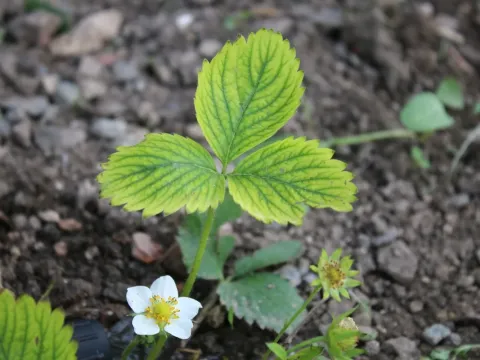
Strawberry chlorosis
Strawberry chlorotic
Strawberry chlorosis is a physiological disorder characterized by a reduction in chlorophyll synthesis within the leaf tissues. Unlike pathogenic diseases, it is not caused by viruses, fungi, or bacteria, but by metabolic imbalances.
What the section contains
Strawberry chlorosis
The primary cause is a deficiency of essential nutrients, most commonly iron, magnesium, or nitrogen. In many cases, an improper soil pH prevents the roots from absorbing these vital elements effectively.
In terms of plant pathology, it is classified as a functional disorder of the plant's metabolism. It does not spread through contact or mechanical vectors, but it can affect large areas of a field due to uniform soil conditions.
To confirm the diagnosis, agronomists typically perform soil testing and leaf analysis. It is crucial to distinguish physiological chlorosis from viral diseases that may cause leaf distortion and stunting.
Excessive soil moisture and poor drainage often lead to oxygen deficiency in the root zone, which impairs the plant's ability to take up nutrients, directly triggering the chlorotic symptoms.
Chlorosis can affect almost all strawberry cultivars grown in both open fields and greenhouses. Younger plants are especially vulnerable during their rapid growth phases.
The disease significantly reduces photosynthesis rates, leading to stunted vegetative growth and a lack of overall vigor. Plants become weak and less resilient to environmental stress.
Yield production is heavily impacted: the number of flower buds is reduced, and fruit development is stunted, resulting in smaller, lower-quality berries with poor market value.
Long-term nutrient deficiency can cause root system degradation and potential plant mortality. Furthermore, affected plants are more susceptible to secondary opportunistic infections.
Economic losses arise from both decreased yields and the operational costs associated with remedial treatments, such as applying chelated micronutrients and soil amendments.
Symptoms usually emerge in the early spring during periods of active growth, particularly when soil temperatures are low and moisture levels are excessively high, restricting nutrient mobility.
During the summer months, as the plant focuses its energy on fruit ripening, the stress of nutrient deficiency becomes more acute. This is when the visual symptoms are typically at their peak.
Autumn remains an important period for recovery. If plants remain chlorotic going into winter, they are less likely to survive cold temperatures due to insufficient nutrient storage.
The occurrence of chlorosis is closely tied to farm management practices such as irrigation and fertilization schedules. Poor water management is the most common cause of seasonal flare-ups.
With timely corrective measures, plants can regain their healthy green color, although the duration of the recovery period depends on the severity of the initial damage to the leaf tissue.
The hallmark sign is the yellowing of leaf tissues between the veins, while the veins themselves remain green. This creates a distinctive, contrasted pattern on the leaf surface.
Symptoms typically begin on the youngest leaves in the center of the plant. If the condition persists, the yellowing can progress to encompass older leaves as well, leading to total foliage discoloration.
As the disorder advances, new leaves become smaller, thinner, and potentially brittle. Growth of new runners and flower stalks is significantly suppressed or stops entirely.
The root system of affected plants often shows signs of poor development, with fewer active fine roots available to absorb water and mineral nutrients from the soil.
- Interveinal yellowing (chlorosis).
- Reduced size of new foliage.
- Stunted growth of flower stalks.
- Premature fruit drop.
- Overall loss of photosynthetic efficiency.
The first step in management is testing and adjusting the soil pH. In alkaline or calcareous soils, acidifying agents should be used to increase the bioavailability of iron.
Foliar application of chelated iron and magnesium provides immediate relief. These micronutrients are absorbed rapidly through the leaves, bypassing the restricted root uptake process.
Improving soil aeration through regular cultivation between rows is essential. This encourages better root respiration and facilitates more efficient nutrient uptake from the soil solution.
Managing irrigation carefully to prevent waterlogging is critical. In fields with heavy clay soils, utilizing raised beds can effectively solve the drainage issues that cause chlorosis.
A balanced fertilization program, incorporating organic matter and essential micronutrients, is the best strategy for maintaining long-term soil health and preventing future outbreaks.