
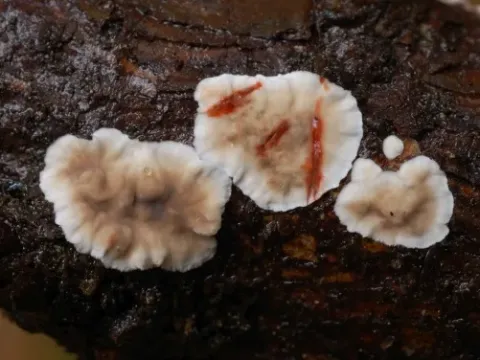
Stereum sanguinolentum
Stereum sanguinolentum
Stereum sanguinolentum is a species of fungus in the family Stereaceae. It is a basidiomycete responsible for significant wood decay in conifer forests worldwide.
What the section contains
Stereum sanguinolentum
The fruit bodies are resupinate or effused-reflexed, typically leathery in texture. A distinct diagnostic feature is that the surface bleeds a red fluid when bruised or scratched.
This fungus acts as a saprotroph and a wound parasite, utilizing powerful extracellular enzymes to break down lignin and cellulose components of the wood cell walls.
It exists as a mycelial network deep within the wood, which allows the fungus to survive in harsh conditions and continue the degradation process over many years.
Due to its specialized enzymatic pathways, it is highly efficient at colonizing conifers, making it a critical pathogen in forest management and silviculture.
Stereum sanguinolentum primarily targets coniferous trees, including species of Picea, Abies, Pinus, and Larix, causing severe heart rot and structural loss.
The infection usually starts through wounds on the trunk caused by forest machinery, wildlife browsing, frost cracks, or natural events like windthrow or branch breakage.
The resulting decay is characterized by mottled white and brown patches, significantly reducing the strength and commercial value of the timber.
In mature stands, infected trees are prone to stem failure and breakage during windstorms, posing a risk to both the stand integrity and forest operations.
Seedlings and young trees may also be affected, leading to reduced growth rates, increased mortality, and overall thinning of the plantation density.
The fungus produces basidiospores that are dispersed by wind throughout the growing season, particularly during periods of high humidity and rainfall.
Spring and autumn provide optimal conditions for the infection of fresh logging wounds, where moderate temperatures and moisture facilitate spore germination.
Mycelial growth within the woody tissue continues year-round, provided the temperature remains above the freezing threshold, allowing the fungus to colonize deeply.
Fruiting bodies are most prominent from late summer through autumn, releasing large quantities of spores that settle on nearby susceptible timber surfaces.
The cycle of dispersal and colonization is constant in forests where proper management of logging debris is neglected, creating a continuous infection pressure.
Visible signs of infection include the presence of crust-like fruit bodies on the bark, which release red liquid when touched, confirming the species identification.
Timber cross-sections show extensive decay, with brittle, discolored patches and dark lines marking the boundaries between different areas of fungal colonization.
External symptoms on living trees may include resin flow, bark cracking, and a thinning crown, as the structural damage hampers water and nutrient translocation.
Increased tree swaying or lean is often a sign that internal heart rot has weakened the base of the trunk sufficiently to compromise its physical stability.
In some cases, the fungal mycelium can be seen beneath the bark in areas where the cambium has been damaged by previous mechanical impact.
Effective management focuses on preventing bark damage during forest operations, as minimizing wounding significantly reduces the number of infection sites.
Prompt removal and proper utilization of infected logs, windfalls, and deadwood are essential to reduce the overall inoculum load in the forest environment.
Biological control using antagonistic fungi, such as Phlebiopsis gigantea, has proven successful in treating stump surfaces to prevent the colonization by S. sanguinolentum.
Forestry workers should ensure that tools are disinfected between stands to prevent the mechanical transfer of fungal spores to healthy trees.
- Implement strict hygiene practices during harvesting operations.
- Monitor stands for signs of mechanical damage and early heart rot symptoms.
- Schedule logging activities during seasons that are less favorable for spore germination.