
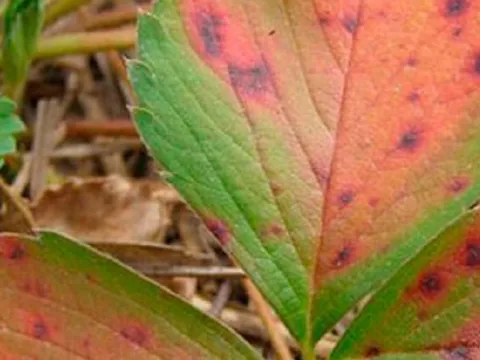
Strawberry leaf scorch
Diplocarpon earlianum
Strawberry leaf scorch is caused by the ascomycete fungus Diplocarpon earlianum (anamorph Marssonia fragariae). This pathogen specifically targets plants within the Fragaria genus, leading to significant foliage damage.
What the section contains
Strawberry leaf scorch
The fungus overwinters as mycelium or spores on infected leaves and stems left in the field. As temperatures rise in spring, the fungus produces conidia, which are splashed by rain or wind to healthy leaf tissue.
Infection occurs through natural openings (stomata) or wounds on the leaves. The incubation period typically ranges from 10 to 15 days, after which characteristic symptoms appear on the plant surface.
Under favourable environmental conditions, such as high humidity and moderate temperatures, the pathogen can produce multiple cycles of spores, leading to rapid spread throughout the strawberry bed.
Dense plantings that restrict airflow provide the perfect microclimate for the disease to thrive, making it particularly problematic in humid regions or during wet growing seasons.
The disease primarily affects leaves, petioles, stolons, and flower stalks. Severe infections result in extensive necrosis of the foliage, drastically reducing the photosynthetic capacity of the plants.
When flower stalks are affected, fruit production is compromised, leading to smaller, deformed berries and overall lower yields. The weakening of the plants makes them less resilient to environmental stresses.
In cases of severe infestation, yield losses can reach 30–50%. The loss of leaf mass also prevents the plant from storing sufficient energy for the next growing season, impacting future harvests.
Stolons affected by the fungus are weak, leading to poor propagation success. Using infected runners for new plantings is a primary factor in spreading the disease to clean fields.
Over time, the accumulation of fungal inoculum in the soil and on crop debris makes it difficult to maintain productive strawberry fields without implementing strict sanitation programs.
Early symptoms appear on the upper surface of the leaves as small, irregular, purple to dark red spots. These spots lack a distinct border and gradually expand in size.
As the disease progresses, the spots turn dark brown or black. In the center of these lesions, small, shiny, raised acervuli (spore-bearing structures) become visible to the naked eye.
On petioles and flower stalks, the symptoms present as elongated, sunken, dark brown lesions. This can cause the stalks to collapse or wilt, giving the plant a scorched appearance.
In highly humid conditions, a grayish mass of conidia may be observed on the leaf spots. Eventually, the infected leaves turn yellow, brown, and wither, starting from the oldest foliage.
The overall appearance of an infected plant includes reduced vigor, premature leaf shedding, and necrotic tissues that resemble physical scorching, which is where the common name originated.
Crop rotation is the first line of defense; strawberries should not be replanted in the same location for at least 3–4 years to avoid soil-borne inoculum.
Sanitation is crucial: all infected plant debris should be removed and destroyed after the harvest to reduce the overwintering population of the fungus.
Cultural practices such as proper spacing and weeding improve air circulation, helping to keep the foliage dry and less susceptible to infection. Avoid excessive nitrogen fertilization, which promotes lush growth prone to pathogen attack.
Fungicide applications are most effective when applied before the bloom stage and immediately after harvest. Copper-based products and systemic fungicides are typically recommended to manage the disease.
- Use certified disease-free nursery stock.
- Mulch the soil to prevent spores from splashing onto leaves.
- Select resistant strawberry cultivars where possible.
- Regular scouting for early disease detection.