
Striga
Striga
Striga (Striga), commonly known as witchweed, is a genus of parasitic plants in the family Orobanchaceae that attach to the roots of various crops.
What the section contains
Striga
It is classified as an obligate hemiparasite, meaning it requires a host plant to germinate and survive, yet it contains chlorophyll and performs photosynthesis.
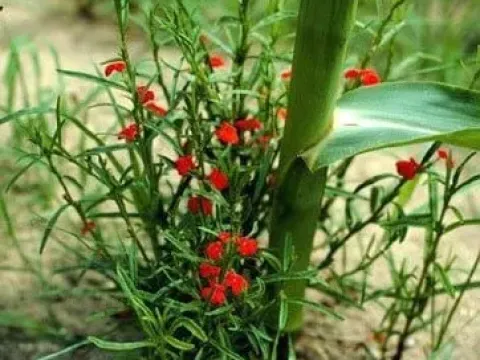
The plant grows upright with narrow leaves and produces small, colorful, often bright pink, red, or white flowers that are easily visible during the blooming season.
The seeds are microscopic and produced in massive quantities, which allows them to remain dormant in the soil for over a decade, waiting for host signals.
This parasite is primarily found in tropical and subtropical regions, posing a massive threat to food security in many countries across Africa and Asia.
Striga primarily attacks cereal crops, including maize, sorghum, pearl millet, and sugarcane, acting as a major economic pest in these sectors.
The parasite connects to the host's vascular system via haustoria, stealing essential water, minerals, and carbon, effectively starving the host plant.
Host plants typically exhibit severe stunting, chlorosis, and wilting, often leading to a total failure of the crop in heavily infested fields.
In addition to nutrient depletion, Striga induces physiological changes in the host, further weakening its resistance to drought and environmental stress.
Yield losses can range from 20% to 100% depending on the soil fertility, infestation density, and the susceptibility of the chosen crop variety.
The lifecycle begins when host root exudates, known as strigolactones, trigger the germination of Striga seeds in the immediate vicinity of host roots.
The germinated seedling must physically attach to a host root within a few days or it will perish due to the depletion of its limited internal energy reserves.
The plant spends several weeks developing an underground parasitic system, during which the host plant begins to show initial signs of stunted growth.
Once established, the parasite emerges above ground, grows rapidly, flowers, and produces thousands of seeds within a relatively short period.
These seeds are then dispersed by wind, water, or agricultural activities, ensuring the parasite spreads and persists for future growing seasons.
Visible signs of infestation often appear as patches of stunted, yellowing cereal crops that seem to suffer from nutrient deficiency despite adequate fertilization.
Plants often exhibit "dwarfism" and rolled, withered leaves, signaling that their access to water and nutrients has been compromised by the root parasite.
The most unmistakable sign is the presence of the Striga plant itself, with its distinct flowers emerging from the soil base of the affected host crop.
Examination of the roots of affected plants typically reveals the attachment of Striga haustoria, which penetrate deep into the root tissues of the host.
In cases of severe infestation, the host plants may collapse entirely before reaching maturity, as they are unable to maintain metabolic processes.
Crop rotation involving "trap crops," such as cowpea or cotton, is a highly effective strategy to induce suicidal germination of Striga seeds.
The development and use of resistant or tolerant crop cultivars are essential tools in managing and reducing the overall impact of Striga on crop yield.
Hand-weeding is beneficial if done before the Striga plant flowers; otherwise, the seeds will have already been dispersed into the field soil.
Integrated soil fertility management, such as the application of nitrogen fertilizers or organic matter, can significantly suppress Striga germination and emergence.
Rigorous phytosanitary practices, including cleaning farming equipment and avoiding the movement of contaminated soil, are vital to preventing spread to new fields.