
Strawberry leaf spot
Mycosphaerella stemmatea
Description
How to identify
The causal agent of this disease is the fungus Mycosphaerella fragariae, which is also recognized in its asexual state as Ramularia tulasnei.
As a member of the Dothideomycetes class, this pathogen is highly specialized for infecting plants within the Fragaria genus, particularly cultivated strawberries.
The fungus produces conidia during the growing season and forms pseudothecia on overwintered leaves, which serve as the primary source of inoculum.
Identification in the field is based on the characteristic morphology of the leaf spots and the subsequent observation of fungal reproductive structures under a microscope.
It remains a significant threat due to its ability to thrive in various temperate environments and its rapid dispersal through wind and rain-splashed conidia.
What it damages
The primary impact of this pathogen is the reduction of the photosynthetic surface area due to widespread leaf necrosis and premature leaf drop.
Affected plants show stunted growth, resulting in poor flower bud development and a significant decline in berry production for the following season.
Damage to the fruit peduncles can lead to berry wilting and poor fruit maturation, drastically lowering the market value of the harvest.
Severe infestations weaken the crowns, which can increase the plant's susceptibility to winter injury and cause stand loss in colder regions.
The cumulative damage often necessitates more frequent field renovation and higher expenditures on chemical or biological control agents.
When it appears
Initial infection occurs in the early spring when temperatures become conducive for fungal growth and moisture remains high on the foliage.
Throughout the spring and summer, the disease spreads rapidly via rain-splashed conidia, especially during periods of high humidity and frequent precipitation.
The fungus remains active during the entire growing season, with multiple infection cycles possible whenever environmental conditions are favorable.
In the autumn, as temperatures drop, the fungus initiates the development of sexual stages on dead plant tissues to ensure survival over the winter.
Cool, wet weather patterns consistently promote the spread and severity of the disease in both open-field and greenhouse production systems.
Signs of infestation
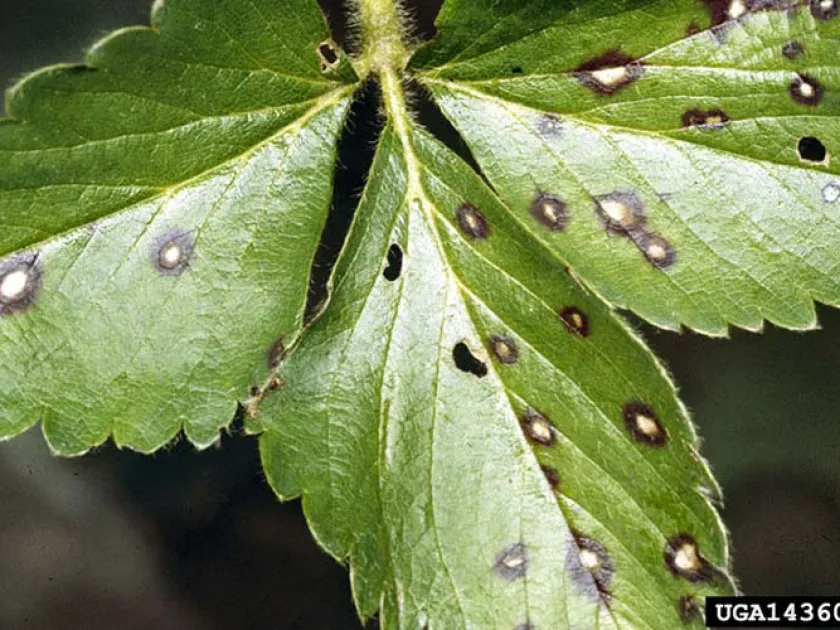
Initial symptoms consist of small, circular, reddish-brown to purple spots that appear on the upper surfaces of the leaves.
As the spots mature, the centers become white or greyish-white while the borders remain dark purple, creating a distinctive target-like appearance.
When the infection is heavy, multiple spots coalesce, covering large parts of the leaf and causing the entire leaf to brown and wither.
Similar necrotic symptoms can be observed on leaf stalks, runners, and the sepals, which can compromise the overall integrity of the strawberry plant.
- Reddish-purple circular lesions.
- White centers of mature spots.
- Lesion coalescence.
- Premature leaf death.
- Symptoms on sepals and runners.
Control measures
Sanitation is critical; removing and destroying old leaves and plant debris significantly reduces the primary inoculum for the next year.
Effective management includes spacing plants properly to ensure good air circulation, which helps keep the foliage dry and inhibits fungal growth.
Fungicide applications are recommended, specifically targeting the period before flowering and immediately after the harvest is completed.
Choosing resistant cultivars is the most sustainable approach to managing strawberry leaf spot and maintaining long-term plantation health.
Avoiding overhead irrigation or scheduling it during early morning hours helps manage leaf wetness duration, which is crucial for preventing infection.
Causes diseases · 1
Discussion
No discussions yet — be the first.