
Strawberry latent ringspot virus
Strawberry latent
Description
How to identify
Strawberry latent ringspot virus (SLRSV) is a plant-pathogenic virus belonging to the Nepovirus genus. It is a member of the Secoviridae family and is characterized by a very wide host range.
The virus is primarily transmitted by soil-inhabiting nematodes of the genus Xiphinema, particularly Xiphinema diversicaudatum. These vectors acquire the virus while feeding on infected roots.
In addition to nematode transmission, the virus can be spread through infected vegetative propagation material, which is a major concern for strawberry nurseries and commercial growers.
Mechanical transmission via contaminated tools or machinery is possible but plays a secondary role compared to nematode and sap-borne transfer in propagation stock.
Due to its latent nature, laboratory testing such as ELISA or RT-PCR is essential for accurate identification and certification of strawberry planting material.
What it damages
SLRSV causes significant economic losses by reducing plant vigor, yield, and quality. Infected strawberry plants often show a decline in fruit set and size, which makes them unprofitable.
The virus affects the metabolic pathways of the host, leading to stunted growth and impaired photosynthetic activity. Over time, this leads to the degradation of the plantation.
Infected plants are often more susceptible to other biotic and abiotic stresses, such as winter injury or drought, which further exacerbates the decline of the berry crop.
Once a field is infested with the virus-carrying nematodes, it becomes very difficult to grow healthy strawberry crops without rigorous soil treatment and sanitation.
The long-term presence of the virus in strawberry nurseries can lead to the widespread distribution of infected runners, jeopardizing the entire regional berry production industry.
Signs of infestation
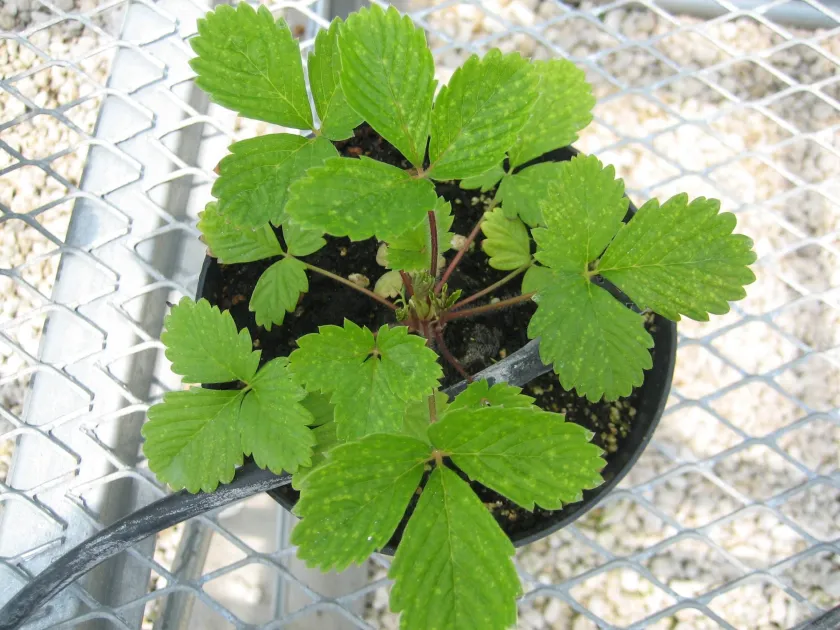
As the name implies, the virus is often latent, meaning that many plants show no visible symptoms. However, susceptible varieties may display chlorotic spots or ring-like patterns on leaves.
Other symptoms include general stunting, twisting of leaves, and reduced leaf size. The plants appear unthrifty and fail to develop as rapidly as healthy plants under similar conditions.
When symptoms do occur, they can be easily confused with nutritional deficiencies, making visual scouting unreliable for early detection of the disease in the field.
Flower deformation and poor fruit development are common outcomes, leading to smaller, misshapen berries that do not meet commercial quality standards.
Regular visual inspections combined with periodic laboratory testing are required to ensure that early infections are detected before they spread throughout the entire plantation.
Control measures
The primary control measure is the use of high-quality, certified, virus-tested planting material. This is the most effective way to prevent the introduction of SLRSV into new fields.
Soil testing for nematode vectors (Xiphinema spp.) should be conducted prior to planting. If high populations of these nematodes are found, soil fumigation or extended fallow periods are recommended.
Strict sanitation practices must be implemented, including the immediate removal and destruction of any plants showing symptoms of viral infection to eliminate the source of the virus.
Proper crop rotation with non-host species is vital for reducing the population of virus-carrying nematodes and lowering the overall pathogen pressure in the soil.
Weed control is an essential part of the management strategy, as many common weeds can serve as reservoirs for both the virus and its nematode vectors, perpetuating the cycle of infection.
Causes diseases · 1
Discussion
No discussions yet — be the first.