
Strawberry leaf spot
Mycosphaerella fragariae
Description
How to identify
The causal agent of this disease is the fungus Mycosphaerella fragariae (anamorph Ramularia tulasnei). It is a well-known plant pathogen within the Ascomycota phylum that targets the foliage of strawberry plants, causing significant economic losses in berry production.
The fungus survives the winter as dormant mycelium or sclerotia within infected strawberry leaves that remain on the ground. When spring temperatures rise and moisture becomes available, the fungus produces conidia, which initiate the primary infection cycle on new growth.
The life cycle involves multiple cycles of asexual spore production during the growing season, allowing for rapid spread between plants. Understanding this cycle is crucial for timing applications of control measures effectively.
What it damages
The primary damage is caused by the premature destruction of the plant's foliage. Since leaves are essential for photosynthesis, their loss significantly reduces the energy available to the plant, resulting in smaller berries and lower yields per plant.
Severe infestations can lead to complete defoliation, which severely stresses the plant crown. This weakens the strawberry plant, making it more susceptible to winter frost damage and reducing its overall lifespan and productivity in subsequent seasons.
When it appears
Disease symptoms typically appear in early spring as new leaves emerge. The infection pressure usually peaks during the flowering and fruit-setting stages, particularly in seasons with frequent rainfall or heavy dew coverage that keeps the foliage wet for extended periods.
Environmental conditions such as high humidity (above 70%) and temperatures between 18°C and 25°C are optimal for spore germination and colonization of leaf tissues. Hot and dry weather typically acts as a natural inhibitor to the spread of this pathogen.
Signs of infestation
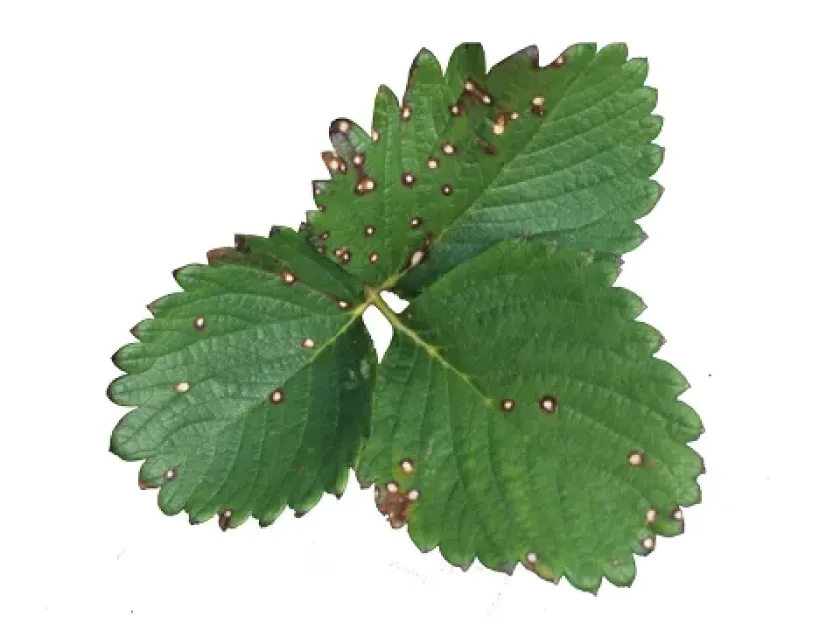
The disease is characterized by small, reddish-purple or brown spots that appear on the upper surface of leaves. As the spots mature, the center of each lesion turns light grey or white, with a distinct dark purple or brown border remaining around the periphery.
In cases of high disease severity, individual spots coalesce to form large necrotic areas. This often causes the entire leaf to wither and turn brown, effectively killing it. This phenomenon is often referred to as leaf blight when the damage is extensive.
Control measures
Management starts with good sanitation, which includes removing and destroying infected leaf debris post-harvest. Proper plant spacing and avoiding overhead irrigation can help maintain drier foliage, which is less conducive to fungal growth.
Choosing resistant cultivars is the most effective long-term strategy for minimizing disease impact. Additionally, growers should ensure that the strawberry patch is well-ventilated to reduce the micro-humidity that favors fungal development.
Chemical control involves the application of appropriate fungicides. It is recommended to perform protective sprays before the onset of flowering and follow up if infection conditions persist, while always adhering to the manufacturer's pre-harvest interval guidelines.
Causes diseases · 1
Discussion
No discussions yet — be the first.