
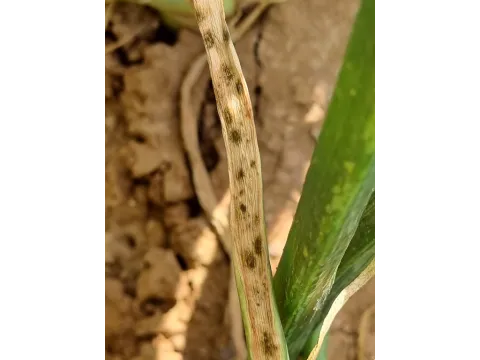
Stemphylium leaf spot
Stemphylium vesicarium
Stemphylium leaf spot is caused by the fungus Stemphylium vesicarium (teleomorph: Pleospora allii), a member of the Ascomycota phylum. This phytopathogen is widely distributed and is known for its ability to devastate various horticultural crops.
What the section contains
Stemphylium leaf spot
The fungus produces dark-colored, septate conidia that function as the primary inoculum. It spreads rapidly through wind currents, splashing water, and contaminated tools used during agricultural operations.
The biological cycle is heavily dependent on moisture. For infection to occur, the foliage must remain wet for a specific period, allowing the spores to germinate and penetrate the epidermal tissue directly or through natural openings.
Stemphylium vesicarium survives as mycelium or ascospores in crop debris, soil, or even on weed hosts. This adaptability allows the pathogen to persist from one season to the next, ready to infect new plantings under favorable conditions.
Optimal development usually occurs at temperatures between 15°C and 25°C combined with high relative humidity. Understanding these environmental triggers is essential for implementing successful integrated pest management strategies.
The disease affects a variety of crops, notably onions, garlic, pears, tomatoes, and asparagus. In onions, it causes severe blight of the foliage, leading to premature leaf death and reduced bulb size, which directly correlates to lower yield.
On pear trees, Stemphylium vesicarium can cause brown spots on leaves and fruit, reducing marketability. Severe infections result in heavy premature fruit drop and significant economic losses for fruit producers.
The pathogen is particularly aggressive in high-density plantings where air circulation is restricted. Once the leaf canopy is compromised, the plant's ability to perform photosynthesis is significantly impaired.
Post-harvest damage is a major concern, as the fungus can invade the neck of the bulb, creating entry points for secondary bacterial pathogens that lead to soft rot during storage and transit.
In addition to yield loss, the cost of frequent fungicide applications significantly increases production overhead, making the disease a primary concern for commercial farmers worldwide.
Initial symptoms are characterized by small, pale yellow, or white water-soaked spots on the leaves. As the infection progresses, these spots expand into elongated or oval lesions that turn brown or dark olive-green.
Characteristic concentric zoning often appears within the lesions as the tissue dies. In humid conditions, the surface of these spots becomes covered with a velvety, dark mass of conidiophores and spores, giving it a soot-like appearance.
As the disease advances, lesions coalesce, eventually causing the entire leaf or stalk to collapse and dry out. This blighted appearance is often the most striking sign in a field setting.
On bulbs, infection manifests as neck rot, where the tissues become soft and discolored. Cutting through an infected bulb often reveals brown internal decay spreading down from the neck region.
In fruits, lesions may appear as circular, sunken, or irregular necrotic spots. These blemishes render the produce unfit for fresh market sale and reduce the overall quality of the harvested produce.
Cultural practices form the foundation of control. Implementing a strict crop rotation cycle of at least 3 years helps deplete the soil-borne inoculum. Removing or burying infected plant debris immediately after harvest is also critical.
Improving air circulation is vital. This can be achieved by optimizing plant spacing and managing irrigation systems—specifically, moving away from overhead sprinklers towards drip irrigation to keep the foliage dry.
Chemical control involving fungicides is necessary during high-pressure periods. Effective classes include strobilurins (QoIs), SDHIs, and triazoles. A preventative schedule is recommended when weather forecasts predict extended periods of wet weather.
Developing and planting resistant cultivars is the most sustainable approach to managing the disease. Farmers should seek varieties that have shown reduced susceptibility in local field trials.
- Monitor fields closely after heavy rainfall or extended dew.
- Use certified disease-free seeds or sets for planting.
- Apply fungicide sprays at the earliest sign of leaf spots.
- Control weeds that might serve as secondary hosts for the fungus.