
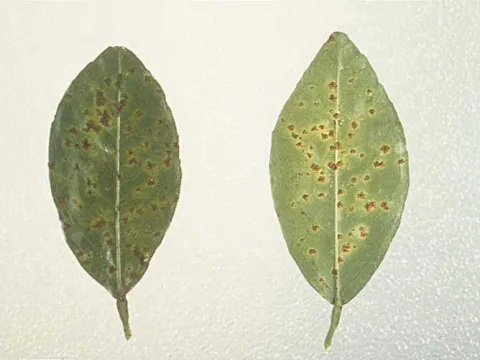
Stenella citri-grisea
Stenella citri-grisea
Stenella citri-grisea is a fungal plant pathogen classified under the kingdom Fungi, phylum Ascomycota. It is recognized as the causal agent of gray leaf spot in various citrus species.
What the section contains
Stenella citri-grisea
The fungus is characterized by its distinct conidiophores emerging from the stomata of the host plant. The conidia are typically multicellular, providing the pathogen with a gray appearance, which is its primary morphological identifier.
Its biological cycle is highly dependent on environmental conditions, specifically high relative humidity and moderate temperatures, which facilitate the production and dissemination of spores.
As a parasite, it colonizes the leaves and tender shoots of citrus plants, feeding on nutrients and structural cells, eventually causing localized tissue death.
It belongs to a group of fungi known for causing various necrotic leaf spot diseases, necessitating careful identification through microscopic examination of the fungal structures.
The host range of Stenella citri-grisea primarily includes commercial citrus varieties such as lemons, oranges, and mandarins. The damage is most visible on foliage, causing significant physiological stress.
Severe infestations lead to massive leaf drop, which drastically reduces the plant's photosynthetic capacity. This depletion of energy resources weakens the tree and stunts its growth.
In nurseries, the presence of this pathogen can destroy the inventory of young plants, making them unmarketable and causing direct economic losses to producers.
Although fruit infection is less common, the presence of spots on the rind can downgrade the quality of the harvest, making it unfit for fresh market distribution.
The cumulative effect of untreated infection is a decline in tree vigor, reduced annual yield, and a higher susceptibility to secondary pests and pathogens.
Infection is marked by the appearance of small, irregular spots on the leaf surface. These spots often start with a grayish hue and can have blurred or indeterminate margins.
A grayish fungal mat, consisting of mycelium and conidia, often develops on the underside of the affected leaf areas, especially in humid conditions.
Chlorosis, or yellowing of the tissue surrounding the necrotic spots, is a common symptom as the disease progresses, eventually leading to tissue necrosis and leaf curling.
Young, succulent shoots are also prone to infection, which may manifest as withered tips or distorted growth patterns in susceptible cultivars.
- Grayish, irregular spots appearing on leaf surfaces.
- Visible fungal growth (gray mat) on the underside of leaves.
- Yellowing of leaf tissue surrounding infection sites.
- Premature leaf abscission causing tree thinning.
Effective management begins with sanitation, which involves the thorough removal and destruction of fallen leaves and infected plant debris to reduce the inoculum load.
Chemical control focuses on the application of copper-based fungicides or other broad-spectrum systemic fungicides applied during periods conducive to spore germination.
Managing the orchard environment is crucial; this includes pruning trees to improve airflow and sunlight penetration, which helps keep the foliage dry.
Irrigation practices should be modified to prevent overhead watering, which promotes the splashing of spores onto healthy leaves and keeps the canopy environment excessively wet.
Integrated Pest Management (IPM) strategies, including monitoring and timely intervention, are the most effective way to keep the infection below economically damaging thresholds.