
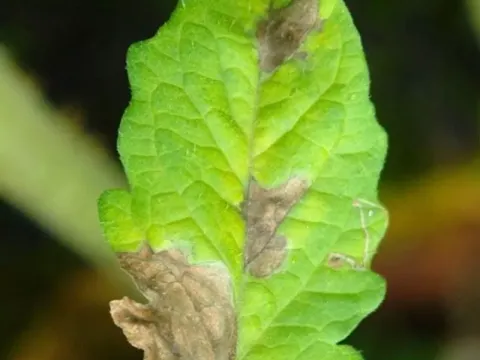
Stemphylium leaf spot
Stemphylium solani
Stemphylium leaf spot is a destructive fungal disease caused by the pathogen Stemphylium solani, which belongs to the Ascomycota division. This fungus is a specialized parasite that primarily attacks plants within the Solanaceae family, significantly reducing foliage density and photosynthetic capacity in both greenhouse and field-grown tomatoes.
What the section contains
Stemphylium leaf spot
The fungus survives during the off-season as mycelium or conidia within crop debris or in the soil. Under favorable environmental conditions, these spores are disseminated by wind, splash irrigation, or rainfall onto susceptible foliage, where they begin the infection process by germinating and penetrating the leaf epidermis.
Once inside the plant tissue, the pathogen produces enzymes and toxins that cause localized cell death, leading to the formation of necrotic lesions. The life cycle of Stemphylium solani is relatively short, allowing for multiple infection cycles within a single growing season if moisture levels remain high.
Optimal development occurs at temperatures between 20°C and 25°C with high relative humidity. The presence of free moisture on the leaf surface is a prerequisite for spore germination. In poorly ventilated greenhouses, the disease can spread rapidly, transitioning from minor leaf spotting to severe defoliation within just a few weeks.
The economic impact of the disease is significant, as the loss of functional leaf area directly correlates with reduced fruit yield and quality. As the plant loses its photosynthetic "engine," it becomes less capable of supporting fruit development, leading to smaller tomatoes and an increased susceptibility to secondary infections.
The primary hosts for this fungus include tomatoes, eggplants, and potatoes. Several wild Solanaceae weeds also serve as alternative hosts, maintaining the inoculum in the field during periods when main crops are not present. Efficiently managing these weed populations is a critical component of disease prevention.
Symptoms typically begin on the lower, older leaves as small, circular to angular dark brown spots. A distinctive feature of Stemphylium leaf spot is the presence of a chlorotic (yellow) halo surrounding the dark necrotic lesion, which gradually expands as the fungus colonizes more tissue.
As the lesions mature, the center of the spot may turn grey or tan and eventually become brittle, often cracking or falling out. Under high humidity conditions, a dark, velvety layer of conidiophores and conidia may be visible on the surface of the lesions, distinguishing it from other leaf spotting diseases.
Integrated pest management (IPM) is essential for controlling Stemphylium leaf spot. This involves combining cultural practices with chemical interventions to minimize the disease pressure. Crop rotation and the selection of resistant cultivars are considered the most effective long-term strategies for sustainable production.
- Practice strict sanitation by removing and destroying infected plant debris.
- Use drip irrigation to keep foliage dry and reduce spore germination.
- Improve air circulation in greenhouses to decrease ambient humidity.
- Apply preventative fungicides when conditions favor disease development.
- Ensure balanced fertilization to maintain optimal plant vigor and health.