
Stenocarpella macrospora
Stenocarpella macrospora
Stenocarpella macrospora is a pathogenic fungus belonging to the Botryosphaeriaceae family. It is a well-known agent causing severe diseases in maize crops, historically documented as Diplodia macrospora.
What the section contains
Stenocarpella macrospora
The fungus is an ascomycete that produces pycnidia, which are asexual fruiting bodies appearing as small black spots on infected plant tissues. These structures contain conidia, the primary spores for disease dispersal.
It survives as mycelium and pycnidia on crop debris, within soil, and on infected seeds. The fungus is highly resilient and can persist in various environmental conditions during the off-season.
Development of the pathogen requires high humidity levels. The spores germinate effectively in the presence of free moisture, which is necessary for the initial infection process to occur on plant surfaces.
The pathogen primarily spreads through windborne or rain-splashed conidia, which infect the maize ears or stalks, especially if the plants have been stressed or wounded by insects.
The primary host for Stenocarpella macrospora is maize (corn). It causes a destructive condition known as diplodia ear rot and stalk rot, which significantly impacts global grain production.
Infection can affect all parts of the maize plant. However, the most severe economic damage occurs when the ears are infected, as the fungus consumes the grain and destroys its structural integrity.
Infected stalks show internal decay at the lower nodes. This disrupts the plant's vascular system, leading to lodging, nutrient deficiency, and significantly reduced grain fill and quality.
The presence of the pathogen in the grain makes it unsuitable for storage, as the fungus can continue to develop in silos if moisture levels are not strictly controlled.
Seed transmission is a major concern, as infected seeds result in poor stand establishment and create new foci of infection within the field, jeopardizing the entire harvest.
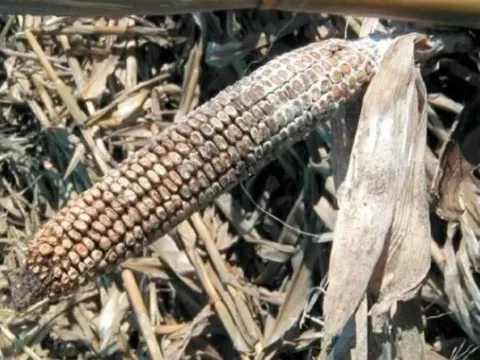
A classic sign of ear infection is the development of a dense, white, moldy fungal mat that often begins at the base of the ear and spreads throughout the husks.
As the disease progresses, the kernels appear discolored, shriveled, and dull. Small, black pycnidia become visible on the surface of the infected ears and stalk internodes.
Leaf symptoms appear as elongated necrotic lesions, which can eventually coalesce and kill large portions of the leaf surface, thereby reducing the plant's capacity for photosynthesis.
Stalks exhibit internal browning and rotting of the pith. This tissue decay weakens the plant, making it highly susceptible to lodging during windy weather.
- White mycelial growth covering the maize ears.
- Black pycnidia scattered on stalks and ear husks.
- Dull, shriveled, and infected grain.
- Internal discoloration and rotting of lower stem nodes.
- Increased rate of plant lodging and premature senescence.
Crop rotation is a cornerstone of integrated pest management for this fungus. Rotating away from maize for several seasons helps eliminate the local inoculum reservoir.
Tillage practices that incorporate crop residues into the soil promote faster decomposition, which reduces the survival rate of the fungus in the field.
Seed treatment with systemic fungicides is crucial to protect young seedlings from early-season colonization and to prevent the pathogen from establishing within the crop.
The use of resistant hybrids is the most effective long-term management tool. Modern breeding focuses on ear husk tightness and stalk strength to prevent fungal entry.
Optimizing plant nutrition and managing insect pests are essential strategies, as healthy plants with minimal mechanical damage are significantly more resistant to fungal penetration.