
Stemphylium leaf spot
Stemphylium sarciniforme
Description
How to identify
The disease is caused by the imperfect fungus Stemphylium sarciniforme, which belongs to the order Pleosporales and acts as a significant plant pathogen for various legumes.
The fungus produces dark, multicellular conidia on specialized structures called conidiophores, facilitating rapid dispersion by wind and splashing rain across the field.
Upon infection, the fungus invades the leaf parenchyma cells, resulting in the breakdown of cellular integrity and the formation of characteristic necrotic leaf spots.
Systematically, this pathogen is associated with teleomorphic states within the genus Pleospora, which are involved in the sexual cycle and overwintering of the fungus.
The lifecycle is highly adapted to humid environments, allowing the pathogen to persist on crop debris and seed, providing a consistent source of inoculum for subsequent seasons.
What it damages
Clover crops, particularly red clover, are the primary hosts, suffering from reduced photosynthetic capacity due to severe foliage infection and leaf drop.
The reduction in leaf surface area leads to lower dry matter production and diminished nutritional quality, which is critical for high-quality livestock fodder.
In addition to direct foliage damage, the pathogen can weaken the plant's root system by reducing overall plant vigor, which negatively impacts plant longevity and persistence.
Seed production is also jeopardized, as the fungus can affect generative organs, leading to poor seed set, reduced germination rates, and potential seed-borne transmission.
Economic losses arise not only from reduced hay yields but also from the increased costs of management and the potential need for premature field termination.
When it appears
Disease development is favored by warm, humid conditions, typically reaching its peak severity during late spring and throughout the summer months.
Primary inoculum originates from overwintered mycelium or spores on soil-borne plant debris, which initiate the infection cycle as temperatures rise.
Frequent rainfall and prolonged periods of leaf wetness are essential for the germination of conidia and successful penetration of the leaf cuticle.
Secondary spread occurs rapidly during the growing season when moisture levels remain high, allowing for multiple cycles of infection and sporulation.
As the season progresses toward autumn, the rate of new infections slows down, although the pathogen continues to survive on senescing plant material.
Signs of infestation
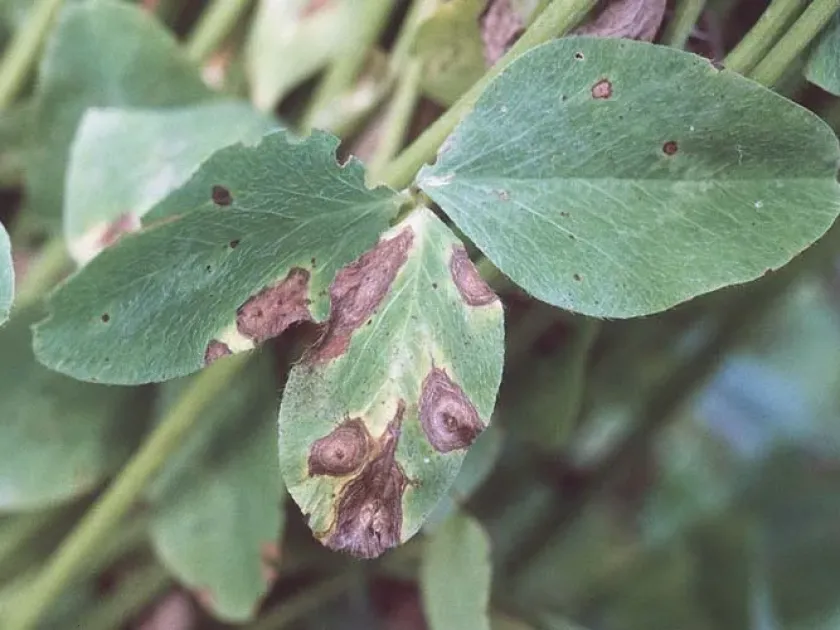
Symptoms typically manifest as small, dark brown spots on leaves that gradually develop a distinct target-like or zonate appearance with alternating light and dark rings.
These spots can coalesce into larger necrotic areas, eventually causing the entire leaf to yellow and wither, leading to premature leaf drop.
A velvety, dark fungal growth may appear in the center of mature lesions, especially during periods of high humidity, representing the active sporulation of the fungus.
In severe cases, the necrosis extends to the petioles and stems, causing them to become brittle and potentially breaking under mechanical stress.
- Circular to irregular dark brown spots
- Target-like concentric zonation
- Velvety fungal sporulation in lesion centers
- Chlorosis and premature defoliation
- Brittle stem and petiole tissue
Control measures
The most effective strategy is the use of resistant or tolerant clover varieties, which can significantly reduce disease pressure and improve crop yields.
Implementing a crop rotation scheme of at least 3 years away from susceptible legumes helps to break the disease cycle by reducing the inoculum density in the soil.
Good field hygiene, including the removal or deep incorporation of infected crop debris, limits the survival of the pathogen between growing seasons.
Balanced fertilization, particularly maintaining adequate phosphorus and potassium levels, promotes plant health and enhances natural defense mechanisms.
Fungicide application is generally reserved for seed production fields or high-value crops when environmental conditions favor severe disease outbreaks.
Causes diseases · 2
Discussion
No discussions yet — be the first.