
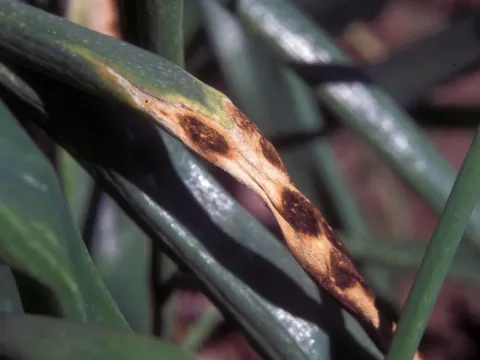
Stemphylium leaf spot
Stemphylium floridanum
Stemphylium floridanum is a fungal plant pathogen classified within the Ascomycota phylum. It is widely recognized as a causal agent of Stemphylium leaf spot, causing significant economic losses in vegetable crops.
What the section contains
Stemphylium leaf spot
The fungus produces conidia, which are the primary units of dispersal. These spores are dark-pigmented, providing them with resilience against ultraviolet radiation during wind-borne movement.
The pathogen survives in crop debris and soil as mycelium or resistant chlamydospores. Its ability to persist for multiple seasons makes it a challenging pathogen to eradicate once established in a field.
Taxonomically, it is distinguished from other Stemphylium species through microscopic examination of conidiophore branching and spore morphology. Molecular identification methods are increasingly used for precision.
Environmental monitoring is essential for early detection, as the pathogen exploits high humidity and moderate temperatures to initiate and expand infection sites across a field.
The host range of Stemphylium floridanum includes various Solanaceae, with tomato plants being the most economically significant victims. Other vegetables like onions and legumes can also be affected.
The disease primarily targets the foliage, causing necrotic spots that reduce the total photosynthetic capacity of the plant. Severe cases lead to premature defoliation.
While fruit infection is less common, it can occur under high inoculum pressure, resulting in lesions that render the produce unmarketable due to aesthetic and quality degradation.
Loss of leaves forces the plant to divert energy reserves, stunting growth and decreasing both the size and the sugar content of the harvested fruits.
In greenhouses, the disease can lead to total crop failure if management practices fail to suppress the development of the fungal colonies during humid periods.
The disease thrives during warm and wet conditions. Optimal temperatures for the germination of conidia are between 20°C and 25°C, with high relative humidity above 80%.
Epidemics often coincide with rainy seasons or periods of frequent overhead irrigation, which provide the necessary water films for the spores to infect the plant tissue.
The polycyclic nature of the pathogen allows it to produce multiple generations of spores throughout the growing season, facilitating rapid spread across large plantation areas.
In protected cultivation environments, the pathogen can remain active year-round if humidity levels are not strictly regulated through ventilation and irrigation management.
Late-season development is crucial as the fungus prepares for survival by colonizing dead plant tissue, ensuring a robust inoculum source for the following season.
Infection begins as small, water-soaked dots that transition into distinct brown or dark gray circular spots on the leaves, often featuring a yellowish halo.
The necrotic areas can enlarge significantly, coalescing to cover large sections of the leaf, which then turns brittle and eventually falls off the plant.
- Dark, velvety sporulation visible on the underside of the necrotic spots.
- Leaf curling or wilting resulting from extensive tissue damage.
- Elongated, brown lesions appearing on the stem or leaf petioles.
- Defoliation starting from the lower canopy and moving upwards.
- Reduced vigor of the entire plant due to impaired photosynthesis.
Stem infections can cause structural weakness, occasionally resulting in the lodging of stems if the tissue necrosis becomes deep enough to compromise the plant's integrity.
Integrated Pest Management (IPM) is the gold standard for controlling Stemphylium leaf spot, focusing on cultural practices to minimize initial fungal population levels.
Crop rotation using non-host species is essential to break the survival cycle of the pathogen in the soil, effectively reducing the risk of recurrence.
Sanitation is vital; removing and destroying crop residues after harvest prevents the fungus from overwintering and limits the inoculum available for the next planting.
Chemical control, utilizing appropriate fungicides, should be applied preventively or at the very first signs of infection, strictly following label guidelines to avoid resistance.
Improving air circulation and utilizing drip irrigation rather than overhead sprinkling helps maintain a dry canopy, making the environment unfavorable for spore germination.