
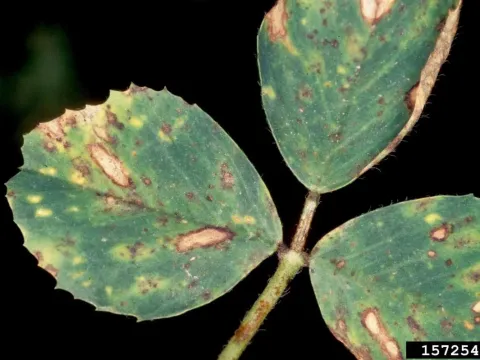
Stemphylium leaf spot
Stemphylium ramulosa
Stemphylium ramulosa is a significant fungal pathogen belonging to the Ascomycota division. It is recognized as a causative agent of leaf spot diseases in various vegetable and field crops, including onions and legumes.
What the section contains
Stemphylium leaf spot
The fungus is characterized by its dark, septate conidia, which are often produced on specialized conidiophores. It persists in soil and crop debris as mycelium and chlamydospores, making it highly resilient to environmental stress.
Taxonomically, it is closely related to other Stemphylium species. Distinguishing it in the field often requires microscopic evaluation of spore morphology and branching patterns of the conidiophores.
The pathogen is highly adaptable and can survive in diverse climatic conditions, allowing it to remain a constant threat to agricultural production in regions where its hosts are grown.
Molecular diagnostic tools, such as PCR, are increasingly used to identify S. ramulosa in infected plant samples to ensure accurate disease management and avoid confusion with similar pathogens like Alternaria.
The primary damage caused by S. ramulosa involves necrotic lesions on leaves and stems. As the infection progresses, these lesions expand, leading to chlorosis and premature tissue death.
In bulb crops, the pathogen is particularly destructive as it can cause neck rot, which compromises the structural integrity of the bulb and renders the produce unmarketable.
The loss of photosynthetic leaf area significantly impacts plant metabolism, resulting in reduced yields, poor fruit development, and decreased quality of the final harvest.
Infected crops are also more susceptible to secondary infections by saprophytic bacteria and fungi, which can exacerbate the decay of tissues during storage and transport.
Economic impact is further amplified by the costs associated with repeated fungicide applications, labor for monitoring, and potential harvest rejection due to visible symptoms of disease.
The development of Stemphylium ramulosa is highly dependent on humidity and temperature. Warm temperatures between 20°C and 25°C and high relative humidity favor spore germination and infection.
Infection cycles occur rapidly during periods of frequent rainfall or heavy dew. Conidia are easily dispersed by wind, water splashes, and agricultural machinery throughout the growing season.
The pathogen thrives in dense crop canopies where air circulation is poor, creating a favorable microenvironment that promotes the establishment of the fungus on host leaves.
Mechanical injuries from insects, hail, or agricultural practices provide easy entry points for the pathogen, accelerating the rate of infection within the field.
While activity peaks during the growing season, the fungus remains viable in soil during the off-season, ready to initiate a new infection cycle when conditions improve.
Initial symptoms are characterized by small, light-colored flecks on the foliage that eventually transition into larger, dark-brown to black necrotic spots with concentric zones.
Leaves often show systemic yellowing (chlorosis) followed by drying and necrosis. Severely infected leaves may wither and drop prematurely, leading to significant foliage loss.
Black, powdery masses of conidia are often visible on the surface of the lesions under high magnification, which is a key diagnostic feature of the disease.
In the case of onion crops, black spots or lesions can be found on the neck and bulb scales, which may show signs of softening or decay as the disease deepens.
Symptoms often appear first on older, lower leaves before spreading upward through the plant canopy as the disease pressure intensifies over time.
Effective management requires an integrated approach that includes crop rotation with non-host species for several years to reduce soil inoculum levels.
Cultural practices, such as removing and destroying crop debris after harvest and optimizing plant spacing, are essential to limit the spread and survival of the pathogen.
Fungicide application remains a cornerstone of control, particularly using compounds that possess both contact and systemic activity to protect vulnerable tissues.
Managing insect pests is critical, as controlling populations of thrips and other herbivores prevents the formation of entry points for the fungal pathogen.
- Select certified, disease-free seed or transplant material.
- Implement balanced fertilization, avoiding excessive nitrogen that can promote succulent growth.
- Improve air circulation through adequate plant spacing and canopy management.
- Rotate crops using non-host varieties to break the pathogen's life cycle.
- Monitor fields regularly to trigger timely fungicide applications when symptoms first appear.