
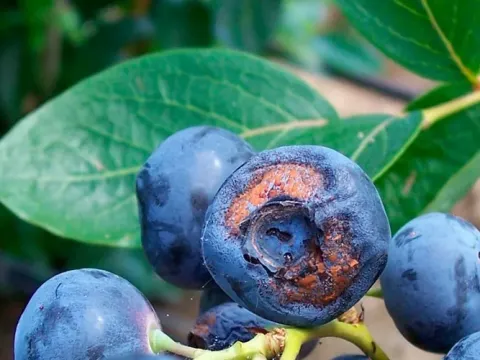
Botryosphaeria vaccinii
Botryosphaeria vaccinii
Botryosphaeria vaccinii is an ascomycete fungus that causes stem blight and canker diseases in various plants of the Ericaceae family, particularly highbush blueberries.
What the section contains
Botryosphaeria vaccinii
The pathogen completes its life cycle by forming reproductive structures, specifically pycnidia and pseudothecia, within the dead or dying woody tissues of the host plant.
Spores are dispersed primarily by rain splash and wind, meaning the fungus can easily move through a plantation during wet weather conditions throughout the growing season.
The fungus is known for its ability to survive in plant debris, making it a persistent threat that requires long-term management strategies in commercial fields.
Upon infecting the host, the pathogen grows through the vascular system, effectively girdling the branch and cutting off the plant's nutrient and water transport.
The disease causes significant damage to blueberry production by killing individual branches and sometimes entire shrubs, leading to heavy yield losses.
Young plants are particularly vulnerable, but the disease can affect mature bushes, leading to a general decline in plant vigor and overall fruit quality over time.
Infection often leads to the death of the main structural branches, which forces growers to remove significant parts of the bush, reducing the plant's production capacity.
The severity of the damage is amplified if the plantation is stressed by environmental factors like drought, poor soil quality, or improper pruning practices.
Secondary infections often exacerbate the damage, as weakened plants become more susceptible to other opportunistic pathogens and pest infestations.
The most common sign is the appearance of reddish-brown spots on the stems, which eventually expand and girdle the branch, leading to sudden wilting of the foliage.
As the infection progresses, the leaves above the canker site may turn yellow or red and eventually wither, creating a visible "flagging" effect on the bush.
Closer inspection of the affected stem will reveal black, pin-head-sized structures (pycnidia) erupting through the bark as the tissue dies.
Cross-sectioning of the infected branch typically reveals a dark, necrotic discoloration in the wood, confirming the presence of fungal colonization.
- Reddish-brown lesions on stems.
- Sudden wilting of leaves during the growing season.
- Flagging branches with discolored foliage.
- Black fruiting bodies visible on dead bark.
Sanitation is the most critical control measure; growers must prune out and destroy infected branches, cutting well below the visible necrotic tissue to ensure all fungus is removed.
Sterilizing pruning tools between bushes using a sanitizing solution is essential to prevent the mechanical transmission of spores during routine maintenance.
Chemical control programs involving copper-based sprays and registered systemic fungicides can help protect plants, especially after wounding from harvesting or pruning.
Promoting overall plant health through balanced nutrition and proper irrigation helps the blueberry bushes resist infection and recover more effectively from minor damage.
Implementing regular monitoring programs to detect the early onset of stem blight can significantly reduce the need for widespread chemical intervention.