
Botryosphaeria ribis
Botryosphaeria ribis
Botryosphaeria ribis is an ascomycete fungus within the Botryosphaeriaceae family. It exists in both sexual (teleomorph) and asexual (anamorph, Dothiorella ribis) stages.
What the section contains
Botryosphaeria ribis
The fungus acts as a facultative parasite, often colonizing stressed or wounded plant tissues. It is highly persistent, surviving as mycelium deep within the woody structures of its hosts.
Asexual reproduction produces pycnidia—small, black, flask-shaped fruiting bodies—that rupture through the bark surface to release spores during wet periods.
Dissemination occurs primarily via water splash (rain or irrigation), wind-blown spores, and the physical transfer of pathogens through contaminated pruning tools.
It displays significant environmental adaptability, allowing it to survive both in high-humidity periods and through drought by remaining dormant within the plant host.
The fungus is primarily known for causing "Botryosphaeria dieback," which affects a wide variety of woody shrubs, most notably currants, gooseberries, and various ornamental species.
The pathogen targets the vascular system of the plant. By colonizing the xylem and phloem, it obstructs the flow of water and nutrients to the branches.
Infection typically initiates through natural openings or wounds such as pruning cuts, frost cracks, sunscald, or insect-caused damage to the bark.
The impact is cumulative; as the fungus spreads internally, it leads to the progressive dieback of entire branches, eventually resulting in the death of the entire plant.
Economic damage is severe, as the pathogen significantly reduces fruit production and can destroy established perennial plantings in orchards and gardens.
A key symptom is the sudden wilting of foliage on individual branches, often occurring during the growing season when water demand is high.
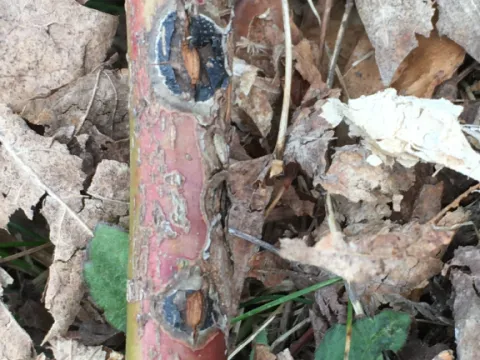
Affected bark may show necrotic, sunken lesions that turn brown or grey. Over time, the bark may peel away, revealing discolored and dead wood underneath.
Tiny, black, pimple-like structures (pycnidia) become visible on the dead bark surface, especially after humid weather, indicating active sporulation.
Internal examination of a cross-section of an infected branch often reveals a dark, wedge-shaped, or irregular pattern of discoloration in the wood.
Branches become brittle and easily snap. When the bark is stripped back, the vascular tissue underneath will appear dark, dry, and necrotic rather than healthy and green.
Pruning is the primary management strategy. Infected branches must be removed well below the site of the infection, ensuring all discolored wood is pruned away.
Sanitation is critical; all pruning tools must be disinfected with alcohol or a copper-based solution between cuts to prevent spreading the pathogen to healthy branches.
Cultural practices include ensuring proper plant vigor through adequate watering and fertilizing to help the plant develop natural defenses against opportunistic fungi.
Applying copper-based fungicides during the early spring and after pruning can provide a protective barrier against spore entry in fresh wounds.
Proper wound management is essential; sealing pruning wounds or large injuries with protective dressings can help prevent the ingress of Botryosphaeria spores.