
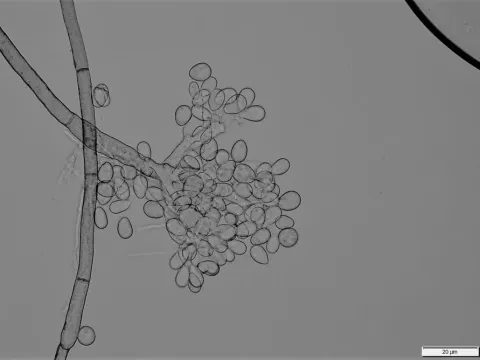
Botrytis fabae
Broad bean
Botrytis fabae is a pathogenic fungus belonging to the kingdom Fungi, division Ascomycota. It is the specialized causative agent of chocolate spot, one of the most economically damaging diseases affecting faba beans (Vicia faba).
What the section contains
Botrytis fabae
The pathogen survives between seasons as sclerotia within the soil or on infected plant debris. These sclerotia can remain viable for several years, serving as the primary source of inoculum when conditions become favorable.
Environmental conditions play a critical role in the development of Botrytis fabae. The fungus thrives in cool, humid weather, with optimal temperatures for infection and spread ranging from 15°C to 22°C, often triggered by prolonged dew or rainfall.
The infection cycle begins as spores (conidia) are dispersed by wind and rain splashes. Once they land on a susceptible host, they germinate and penetrate the plant tissue, establishing the initial lesions on the lower leaves.
Morphologically, the fungus produces branched conidiophores that release abundant conidia. These spores are highly efficient at initiating secondary cycles of infection, allowing the disease to spread rapidly throughout a crop canopy.
The primary host of Botrytis fabae is the faba bean. The disease manifests as severe leaf spotting and blighting, which significantly reduces the photosynthetic area of the plant, leading to decreased vigor and overall yield loss.
In severe infections, the lesions expand rapidly, causing entire leaves to die and drop prematurely. This defoliation severely impacts the plant's ability to fill pods, resulting in smaller, shriveled, and lower-quality seeds.
Stem infections can cause stem breakage and lodging, which makes harvesting extremely difficult. Increased lodging leads to substantial losses in harvested seed quantity and complicates the use of agricultural machinery.
The pathogen also attacks flowers, causing them to blight and fall off. This prevents pod formation and can result in near-total yield failure in fields where the disease is not managed properly.
Additionally, infected seeds may harbor the fungus, which not only impacts their market value but also acts as a carrier for the pathogen to new fields or into the next growing season.
The disease typically emerges in the spring, once the weather turns mild and wet. The primary inoculum originates from overwintered sclerotia, which germinate to produce conidia during periods of high humidity.
The most critical window for infection is during the budding and flowering stages of the bean plants. If humid conditions persist during this time, the risk of a widespread epidemic increases significantly.
During the summer months, intense heat and dry conditions may temporarily suppress the fungus. However, if these are followed by cool, rainy intervals, the pathogen will quickly resume its spread.
The lifecycle of Botrytis fabae involves multiple rounds of infection throughout the season. Each generation of conidia serves to amplify the inoculum pressure, potentially leading to rapid disease development.
As the season draws to a close and temperatures fall, the fungus transitions into its overwintering phase, producing sclerotia that remain on the field surface or buried in the soil until the following spring.
The characteristic symptoms begin as small, circular or elliptical reddish-brown spots on the leaves. As the infection progresses, these spots enlarge and merge, often showing a dark brown margin resembling a "chocolate" stain.
Stems can also develop elongated, dark-colored lesions. When these lesions girdle the stem, the plant wilts and dies rapidly. Under humid conditions, a grayish, fuzzy fungal growth appears on the surface of these lesions.
Flowers and pods are equally susceptible, showing similar brown, necrotic lesions. Pod infection can cause them to become deformed, blackened, and eventually rot, destroying the seeds inside.
- Small, dark red-brown leaf spots.
- Lesions coalescing into large necrotic blotches.
- Gray, mold-like sporulation on infected surfaces.
- Premature leaf drop and flower blight.
- Blackening and deformation of pods.
Early diagnosis is crucial, so scouts should pay close attention to the lower canopy where the disease usually starts before moving upwards to the younger, more susceptible foliage.
Cultural management is the first line of defense, particularly the use of a 3-4 year crop rotation to prevent the buildup of sclerotia in the soil. Avoiding continuous cropping of beans is essential for long-term control.
Sanitation practices, including the deep burial of crop residues via plowing, help reduce the amount of primary inoculum. Using certified, disease-free seed is also vital to prevent the introduction of the pathogen to a new farm.
Selecting varieties with known resistance or tolerance to Botrytis fabae is the most sustainable management strategy. Furthermore, ensuring adequate plant spacing promotes airflow, which reduces humidity around the canopy.
Fungicide applications, including benzimidazoles, triazoles, or strobilurins, are necessary when weather conditions favor disease spread. Treatment should begin at the first sign of symptoms for maximum efficacy.
Effective chemical control requires regular monitoring and strictly following product guidelines to prevent the development of fungicide resistance in the fungal population. Rotate modes of action where possible.