
Botryosphaeria stevensii
Botryosphaeria stevensii
Botryosphaeria stevensii is a member of the Ascomycota phylum and is a significant plant pathogen responsible for causing cankers and dieback in a wide range of woody hosts. Its asexual stage is recognized as Diplodia mutila.
What the section contains
Botryosphaeria stevensii
This fungus belongs to the order Botryosphaeriales and the class Dothideomycetes. It is characterized by its ability to act as both a latent pathogen, living inside plant tissues without causing symptoms, and an aggressive parasite when the host is stressed.
The fungus produces pycnidia (fruiting bodies) within the bark of infected trees. These structures release conidia (spores) that serve as the primary source of new infections throughout the growing season.
Identification is often confirmed via microscopic examination of spores or molecular analysis. In culture, the fungus grows rapidly, producing dense, dark mycelia that are typical for this species within the Botryosphaeriaceae family.
It is distributed globally and poses a major threat to both forest ecosystems and commercial agricultural sectors, surviving in plant debris or living tree bark for multiple years.
The pathogen attacks numerous species, including fruit trees like apple and pear, as well as grapevines, walnuts, and ornamental trees like cypress. It is a primary cause of limb dieback and trunk cankers.
Damage often starts at the point of injury, such as pruning wounds or frost cracks. The mycelium colonizes the cambium layer, eventually girdling the branch or trunk, which cuts off the water and nutrient supply to the rest of the plant.
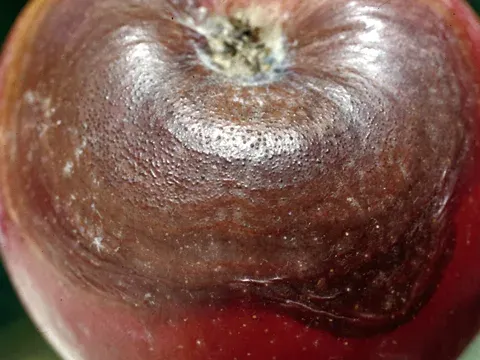
In fruit, Botryosphaeria stevensii causes a rot characterized by firm, dark brown lesions. This can lead to significant post-harvest losses if infected fruit are not sorted out during the packing process.
For woody crops, the necrosis can be severe enough to kill the entire plant if the main stem is girdled. This leads to reduced yields, long-term degradation of orchard productivity, and the eventual loss of mature, high-producing trees.
The degradation of the wood structure also makes trees more susceptible to physical breakage during storms, leading to additional secondary mechanical damage in infected plantations.
The disease cycle is highly dependent on environmental conditions, with the highest infection risk occurring during wet and warm weather. Spore release is triggered by rain and heavy dew, allowing for dispersal throughout the orchard.
Springtime marks the period of highest vulnerability as plants begin new growth and pruning activities create open wounds. The pathogen utilizes these openings to colonize susceptible plant tissues rapidly.
During the summer, repeating cycles of spore production allow the fungus to spread further. Each rainfall event acts as a potential dispersal mechanism for the pathogen, particularly in high-density plantings.
In winter, the fungus persists in a dormant state within the infected bark or dead wood. It is highly resistant to cold, ensuring it remains viable to re-infect the host once temperatures rise in the spring.
The timing of pruning is critical; pruning during periods of high humidity or rainy weather significantly increases the risk of Botryosphaeria infection through the fresh cuts.
The most diagnostic sign of the infection is the development of cankers — localized dead areas on the bark. These cankers may appear sunken, dark, and are often surrounded by callus tissue in the initial stages.
As the infection progresses, small, black, pin-head-sized structures (pycnidia) become visible on the surface of the bark. These are the fruiting bodies where the pathogen produces its spores.
Leaves on infected branches often show symptoms of chlorosis, wilt, and premature drop. This occurs because the fungal colonization of the sapwood blocks the xylem, preventing water movement.
Cutting into the bark of an infected branch reveals reddish-brown or necrotic tissue beneath, often showing a clear distinction from the healthy, white or light-colored tissue of uninfected wood.
- Sunken lesions or bark cracking.
- Exudation of sap or gum from canker sites.
- Dieback of terminal shoots or entire branches.
- Dark, firm rot spots on fruit.
Sanitation is the cornerstone of management. All infected branches must be pruned out, removed from the orchard, and destroyed to reduce the overall inoculum load in the environment.
Pruning tools must be sterilized regularly between cuts, especially when moving between different trees, to prevent mechanical transmission of fungal spores within the orchard.
Protecting the host from stress is essential for minimizing susceptibility. Proper irrigation, soil nutrition, and protection against sunburn or frost cracks help maintain the tree's natural resistance.
Preventative fungicide applications, particularly those containing copper, can be effective when applied during the dormant season or during key growth phases to protect pruning wounds and vulnerable tissue.
Integrated Pest Management (IPM) strategies, including monitoring for insect damage, are also important, as insect tunnels can provide the necessary entry points for Botryosphaeria stevensii to enter the tree bark.