
Botryosphaeria quercuum
Botryosphaeria quercuum
Description
How to identify
Botryosphaeria quercuum is an ascomycete fungus belonging to the order Botryosphaeriales, recognized as a significant pathogen responsible for canker and necrosis diseases in trees.
The fungus functions both as an endophyte, existing silently within the host tissues, and as a necrotrophic pathogen that triggers rapid tissue death under favorable conditions.
Its biological cycle is characterized by the production of pycnidia, which serve as asexual fruiting bodies that release conidia, facilitating rapid spread during rain events.
Systematically, it is classified within the kingdom Fungi, known for its ability to adapt to various woody hosts, primarily focusing on oak species.
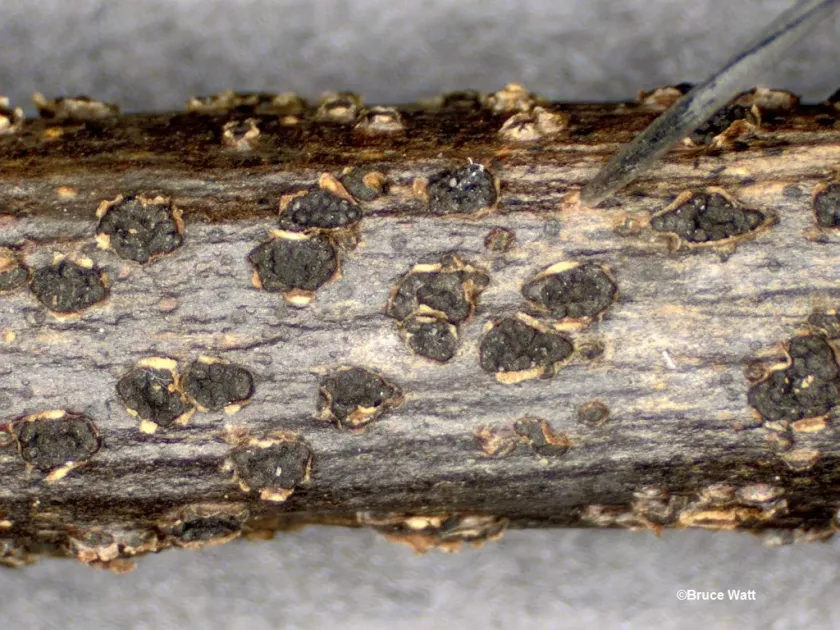
Identification often requires careful inspection of the bark surface for fruiting structures, which appear as small, dark pustules on the necrotized tissue.
What it damages
The pathogen primarily affects oaks (Quercus), leading to severe damages such as limb dieback, bark cankers, and, in advanced stages, the death of the entire tree.
The fungus disrupts the vascular system by colonizing the cambium and xylem, which effectively cuts off the supply of water and nutrients to the canopy.
This biological interference results in thinning of the crown, reduced foliage density, and stunted annual growth, causing significant degradation of forest stands.
In addition to physiological damage, the fungus compromises the timber quality, making the wood prone to further degradation by secondary invaders and insects.
Young trees and those already stressed by environmental factors like drought or pollution are particularly vulnerable to the severe impact of this pathogen.
When it appears
The pathogen is most active during the growing season, particularly in periods characterized by high humidity and moderate to warm temperatures.
Spore dispersal occurs predominantly via rain splashes and wind, which transfer the conidia from infected branches to healthy tissue during late spring and summer.
Throughout the autumn and winter months, the fungus enters a survival phase, residing in the bark crevices and decaying wood until the next warm cycle begins.
Drought stress in the summer significantly lowers the tree's natural defense mechanisms, making it easier for the fungus to establish infection during subsequent rainy periods.
Understanding the seasonal behavior is crucial, as infection often occurs through natural openings and physical wounds created during the active growing cycle.
Signs of infestation
The most visible signs of infection include localized, sunken lesions or cankers on the bark of stems and branches, which often become deep and woody over time.
- Darkening and cracking of the bark surface around the canker.
- Formation of minute black pycnidia scattered across the necrotic bark area.
- Premature yellowing and wilt of leaves on affected branches.
- Crown dieback manifesting as dry, leafless branches amidst a healthy canopy.
- Exudation of sap or resin from the infection sites on the trunk or stems.
As the disease progresses, these lesions can expand to girdle the branches, leading to the rapid drying out and falling of the affected parts.
Control measures
Integrated management is essential, focusing primarily on the removal and burning of infected branches to reduce the inoculum level in the environment.
Proper pruning techniques are vital; ensure that all infected wood is cut back to healthy, non-infected tissue to halt the spread of the fungal mycelium.
Chemical control involving copper-based fungicides can be applied to large wounds or vulnerable stands to prevent primary infections during high-risk seasons.
Enhancing tree vitality through adequate irrigation and site-specific fertilization helps the host plant resist colonization and recover from minor infections.
Tools must be sanitized regularly with bleach or alcohol to prevent mechanical transmission of spores between infected and healthy tree specimens.
Causes diseases · 1
Discussion
No discussions yet — be the first.