
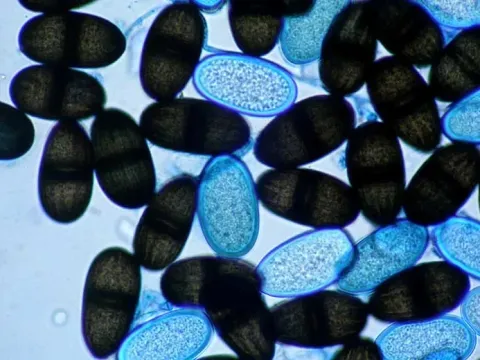
Botryosphaeria rhodina
Botryosphaeria rhodina
Botryosphaeria rhodina is an ascomycete fungus that acts as a significant plant pathogen, known for its wide host range across woody perennials.
What the section contains
Botryosphaeria rhodina
It occupies the family Botryosphaeriaceae and is frequently identified in its asexual state, Lasiodiplodia theobromae, in tropical and subtropical regions.
The organism is a facultative parasite, meaning it can survive on dead or decaying organic matter while remaining ready to infect stressed living tissues.
At the microscopic level, the fungus forms pycnidia, which are dark, flask-shaped structures that release numerous conidia responsible for spread.
Its complex life cycle allows it to adapt to various environmental niches, making it a persistent threat in both agricultural and forest ecosystems.
This pathogen causes severe economic losses by inducing dieback, stem cankers, and rapid vascular wilting in fruit and ornamental trees.
In vineyards and citrus orchards, the fungus destroys the vascular system, preventing nutrient transport and leading to the eventual collapse of branches.
Post-harvest fruit rot is another critical impact, where the fungus causes rapid decay, rendering the produce unsuitable for market.
Seedlings and young plants are particularly vulnerable, often succumbing to stem necrosis shortly after infection occurs in the nursery.
Chronic infestations degrade the overall tree health, reducing yield, fruit quality, and the productive lifespan of the plantation.
The development of the fungus is highly dependent on climate, with optimal growth occurring during periods of high humidity and warm temperatures.
Dissemination typically occurs through water splash, wind-blown spores, or contaminated tools used during pruning operations.
Infection cycles are often initiated after weather-related stresses, such as frost, drought, or sunscald, which create entry points for the pathogen.
The fungus can overwinter in infected bark, twigs, and mummified fruits, serving as a reservoir for the next growing season.
Increased humidity facilitates the mass release of spores from mature pycnidia, leading to rapid spread throughout the canopy during rain events.
The earliest visual symptoms often include localized wilting of leaves followed by the chlorosis and browning of affected branches.
Cankers appear as darkened, sunken areas on the bark, which may eventually crack or exude resin as the tree attempts to wall off the infection.
When infected wood is examined, characteristic brown or black streaks are visible in the xylem, indicating systemic colonization.
Small, pinhead-sized black dots, representing the fungal fruiting bodies (pycnidia), can be observed breaking through the bark surface.
- Darkened, necrotic lesions on woody stems;
- Rapid wilting and dieback of terminal shoots;
- Discolored vascular tissue upon cross-sectioning;
- Resin or gum exudation from infected sites.
Sanitation is the cornerstone of control: all symptomatic wood must be pruned and removed from the site to lower the inoculum density.
Tools used for pruning should be regularly disinfected with bleach or alcohol to prevent moving spores from infected to healthy trees.
Chemical control can be achieved through systemic fungicides, applied preventively to protect pruning wounds and sensitive tissue during high-risk periods.
Cultural practices such as irrigation management and balanced fertilization are essential to reduce plant stress and enhance natural defense mechanisms.
In some integrated systems, biological control agents are applied to compete with the pathogen for colonization sites, providing a safer environmental alternative.